Soaked, Frozen, and Absolutely Loving It: In Defence of Britain's Glorious Refusal to Let the Weather Win
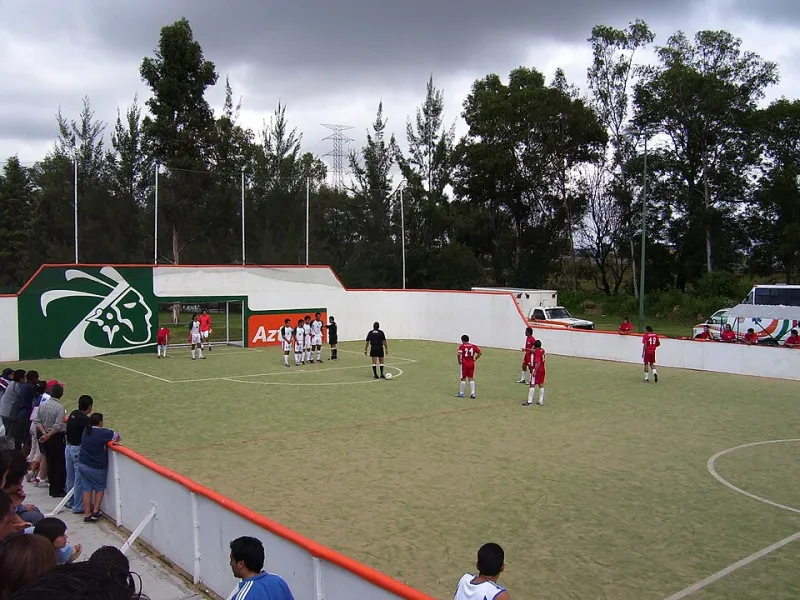
Let me paint you a picture. It is a Saturday in October. The wind is doing something that the forecast described as "breezy" but which is, in practice, attempting to remove your ears. The rain is not falling so much as arriving horizontally, with intent. The pitch — if we are being generous — resembles a ornamental pond that someone has placed some goalposts in.
And yet. The referee blows his whistle. Play begins. And somewhere in the stand — a structure that uses the word loosely, being mostly corrugated iron and optimism — a group of people wrapped in every layer they own begin to cheer, and mean it.
This is British sport. And it is, I will argue until I'm blue in the face (which, given the temperature, won't take long), an absolute treasure.
The Weather Is Not the Problem. The Weather Is the Point.
Other nations have better climates for sport. Australia has sunshine. Spain has warmth. Scandinavian countries have, at least, the dignity of proper snow rather than the grey, indeterminate sleet that Britain specialises in — the kind that can't quite commit to being rain or ice and ends up being both and worse than either.
But here's the thing: those countries don't have what we have. They don't have the specific, peculiar, magnificent culture that emerges when an entire nation decides, generation after generation, that the weather is simply not a good enough reason to stay indoors.
Cricket is perhaps the purest expression of this national character. No other sport has developed such elaborate rituals around the possibility of not playing. The covers. The inspections. The groundsman poking the pitch with something that looks like a kitchen implement while men in blazers peer anxiously at the sky. And then — when the rain finally eases to something merely unpleasant — the decision to play anyway, on a surface that a sensible person would describe as unsuitable and a cricket person would describe as "a bit damp, but we'll manage."
"I've played in conditions where I genuinely couldn't see the ball," says one club cricketer from Yorkshire, who has been playing for thirty-one years and has the arthritis to prove it. "Mist coming off the outfield, drizzle the whole day. Best game of the season. Everyone was in a brilliant mood because we'd all decided together that we weren't going home."
This is the key insight. The collective decision to carry on — to look at conditions that are objectively terrible and choose, together, to play anyway — creates a bond that perfect weather simply cannot manufacture.
What Doesn't Kill You Makes You Slightly Damp But Considerably Tougher
There is a resilience argument here that goes beyond sport, but sport is where it's most visible. British athletes who have trained through grey winters, competed on waterlogged pitches, and run races into headwinds that felt personal develop something that's hard to quantify but easy to recognise: an absolute refusal to be defeated by circumstances outside their control.
This, incidentally, is not nothing. Mental toughness — the ability to perform when conditions are against you — is one of the most transferable skills sport can teach. And Britain's climate provides a masterclass in it, free of charge, approximately two hundred and fifty days a year.
Ruby Okafor, a middle-distance runner from Birmingham who has competed internationally, puts it simply: "When I raced in warmer countries, I noticed that some athletes — very talented athletes — would visibly struggle when conditions changed. Wind, cold, unexpected rain. For me, that was just Tuesday training. I'd been dealing with that my whole career."
The groundskeeper at a rugby club in the West Country — a man who has spent twenty-two years maintaining a pitch that spends roughly six months a year under varying degrees of water — offers a different perspective, but reaches the same conclusion. "The players who've grown up playing in this," he says, gesturing at a sky that is doing something deeply ominous, "they're different. They don't look for excuses. They just get on with it."
The Spectator Experience: A Study in Committed Lunacy
A word must be said for the people on the other side of the touchline. The supporters. The parents. The partners who are there because they love someone who plays, and who are now questioning several life choices while standing in a field in Lincolnshire in February.
These people are, and I say this with enormous affection, completely mad. And wonderful.
The British sporting spectator has developed survival techniques that deserve study. The layering system — base layer, mid layer, the ancient club fleece, the waterproof that stopped being waterproof three seasons ago, the extra jumper they brought "just in case" — is a feat of thermal engineering. The flask of tea is non-negotiable. The ability to maintain enthusiastic conversation while unable to feel one's face is a skill that takes years to acquire.
And the camaraderie that emerges in these conditions is something genuinely special. Strangers become friends over shared suffering. Opposition supporters, united by the absurdity of their situation, exchange sympathetic nods. The collective experience of enduring something difficult together creates warmth that has nothing to do with the temperature.
"I've had the best conversations of my life standing on a touchline in the rain," says one parent from Shropshire who has watched her son play rugby at every level from under-sevens to senior club for thirteen years. "Something about being cold and wet together makes everyone a bit more honest. A bit more human."
In Praise of the Great British Carry-On
Fair-weather sporting nations — and they know who they are — might look at Britain's relationship with its climate and see suffering. We see something different. We see ritual. We see identity. We see the specific, stubborn, brilliant refusal to let something as trivial as the sky get in the way of something as important as sport.
The weather doesn't make British sport harder. It makes it richer. It strips away the comfortable and the convenient and leaves something purer — the game itself, and the people who love it enough to stand in a field and watch it in conditions that would ground aircraft.
So here's to the groundsmen who get the covers on at midnight. The referees who inspect the pitch at dawn and decide, against all available evidence, that it's playable. The spectators in their five layers and their expired waterproofs. The athletes who've trained in every shade of British grey and come out the other side harder and better for it.
Rain stopped play? Not here, mate. Not ever.
Put the kettle on. We're staying.