Sequins, Sweat, and Silver: Why Britain's Competitive Dance Athletes Deserve Way More Than a Slow Clap
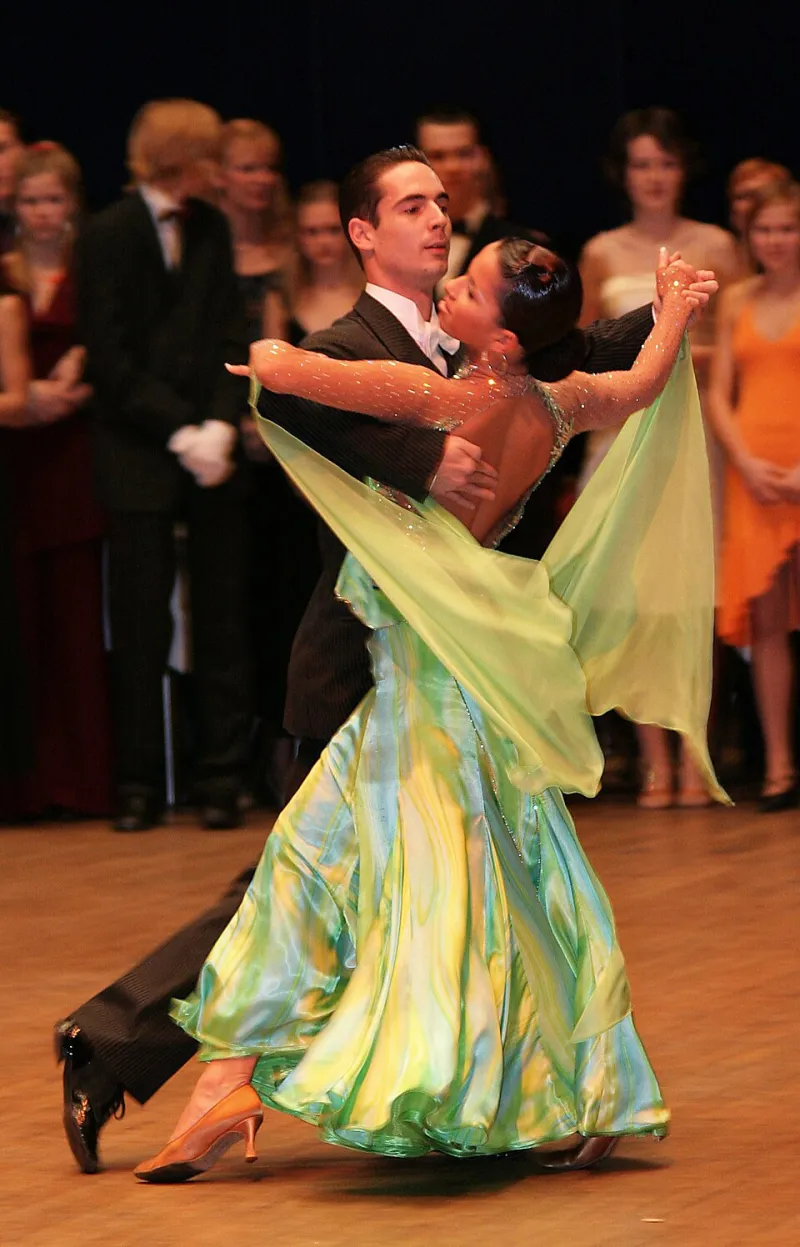
Photo: che, CC BY-SA 2.5, via Wikimedia Commons
Sequins, Sweat, and Silver: Why Britain's Competitive Dance Athletes Deserve Way More Than a Slow Clap
Let me paint you a picture. It's 6:15am on a Tuesday in Birmingham. A seventeen-year-old is in a dance studio, working through footwork combinations for the ninety-third consecutive morning. She trains five hours a day, six days a week. She follows a nutrition plan. She has a strength and conditioning coach. She has competed in fourteen countries. She is, by any honest definition of the word, an elite athlete.
Ask most people in British sport whether she deserves the same recognition as a junior tennis player or a cycling academy prospect, and watch them hesitate.
That hesitation is the problem.
The Sport That Dares Not Speak Its Name
Competitive dance in Britain operates in a peculiar cultural blind spot. It is enormous — tens of thousands of young people compete in disciplines ranging from ballroom and Latin to street dance, breaking, and contemporary — yet it is simultaneously invisible in the mainstream sporting conversation. There is no Saturday afternoon slot on BBC One. There is no flagship national newspaper coverage. There is no casual pub debate about who'll win the British Open Ballroom Championship.
And yet the talent being produced is remarkable. British breakers, ballroom dancers, and Latin competitors are consistently competitive at European and World level. The country has produced World and European champions across multiple dance sport disciplines. These athletes are, by the cold metrics of international competition, among the most successful British sportspeople of their generation.
You almost certainly cannot name one of them.
What Breaking at the Olympics Actually Meant
When breaking appeared at the Paris 2024 Olympics, British dance sport held its collective breath. Here, finally, was the moment. The legitimising stamp. The mainstream crossover. Olympic status, live on the BBC, prime time.
What actually happened was more complicated. The coverage was enthusiastic but brief. The commentary was occasionally baffling. And within weeks, the International Olympic Committee had confirmed that breaking would not feature at the 2028 Los Angeles Games, citing concerns about television ratings and audience comprehension.
For British b-boys and b-girls — many of whom had spent years training specifically with Olympic qualification in mind — it was a brutal blow. For the wider dance sport community, it felt like confirmation of a fear that had always lurked beneath the surface: that the sporting establishment would extend a hand, then pull it away.
The Funding Gap Is Embarrassing
Here's where it gets genuinely uncomfortable. UK Sport, the body responsible for distributing lottery funding to elite Olympic and Paralympic sports, operates on a medals-based model. Sports that produce podium finishes get funded. Sports that don't, or sports that sit outside the Olympic programme, largely go without.
Dance sport, despite its competitive depth and international success, receives a fraction of the support given to comparable athletic disciplines. A junior ballroom dancer competing at international level will typically fund their own travel, costumes, coaching, and competition entry fees. A costume alone for a senior Latin competition can cost upwards of two thousand pounds. The families absorbing these costs are not, by and large, wealthy families.
The result is a slow but steady narrowing of who can actually compete at the top level. The sport is, gradually and quietly, pricing out the kids who might be its future champions.
Compare this to the investment flowing into, say, a cycling academy or a swimming programme, and the disparity is stark. Not because cycling and swimming don't deserve support — they absolutely do — but because the logic that excludes dance sport from serious funding is increasingly difficult to defend.
'We Just Have to Work Harder'
I spent a morning at a dance sport club in Manchester watching a group of under-sixteens prepare for a regional competition. The head coach, a former national champion herself, has been running the club for eleven years largely on willpower and modest membership fees.
She is not bitter about the funding situation. She is, however, clear-eyed about it. 'We don't waste time being angry about what we don't get,' she tells me. 'We just have to be smarter, more resourceful, and make our athletes tougher because of it.'
The athletes I watch that morning are extraordinary. A thirteen-year-old boy runs through a cha-cha routine with the focus of someone twice his age. Two fifteen-year-old girls practise a jive sequence at full tempo for forty minutes without stopping, adjusting tiny details of footwork and frame on each pass. Their fitness is obvious. Their discipline is obvious. Their talent is obvious.
What is also obvious is that none of them are under any illusions about how the wider world views what they do.
'People at school think it's like Strictly,' one of the girls tells me, without malice. 'They don't really get that it's a sport.'
The Strictly Problem
And there, in nine words from a fifteen-year-old, is the central tension of competitive dance in Britain. Strictly Come Dancing — beloved, brilliant, genuinely entertaining — has both raised the profile of dance and accidentally reinforced the idea that it is primarily a performance art, a celebrity vehicle, an entertainment product.
The competitive dance community has a complicated relationship with Strictly. It brings new young people to the sport. It creates cultural visibility. It also, almost by accident, frames dance as something celebrities do for fun rather than something athletes dedicate their lives to.
Professional dancers on Strictly — many of them former competitive champions — are, on screen, presented as teachers and entertainers rather than as the elite athletes they actually are. The framing matters. It shapes how the public thinks about what dance is and who it's for.
The Case for Change
Here's the argument, simply stated: if we accept that gymnastics is a sport — and we do, enthusiastically, every four years — then the intellectual gymnastics required to exclude competitive dance from the same category are considerable.
Both disciplines require extraordinary physical conditioning. Both demand technical mastery built over years of intensive training. Both are judged, subjectively, by panels of experts applying defined criteria. Both produce athletes who dedicate their childhoods, their bodies, and significant financial resources to the pursuit of excellence.
The difference, at this point, is almost entirely cultural. And culture changes.
Breaking's Olympic moment — however brief — demonstrated that the world is capable of watching competitive dance and recognising it as sport. British dance athletes competing at international level deserve the same structural support, the same media attention, and the same basic respect extended to their counterparts in more traditional disciplines.
They have earned it. Repeatedly, internationally, and largely without anyone noticing.
It's time we started paying attention.