New Money, Old Grounds: How Private Cash Is Splitting British Grassroots Sport Right Down the Middle
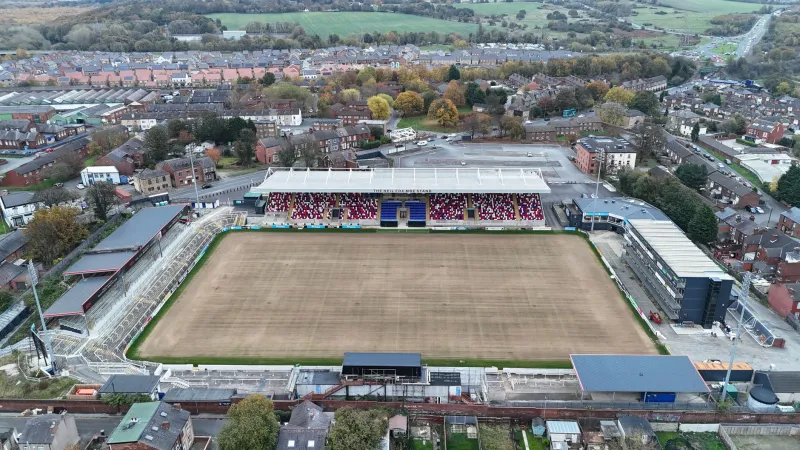
Somewhere in the East Midlands, a junior football club that was running tombolas to fix its leaking clubhouse roof last year is now training under floodlit 3G pitches with a kit sponsor whose logo you'd recognise from a FTSE 100 listing. Forty miles away, a club of similar size and similar history is still fundraising for the same leaking roof. The difference between them isn't effort, community spirit, or even the quality of their players. It's who happened to knock on whose door.
British grassroots sport is in the middle of a private investment boom, and nobody's entirely sure whether to celebrate it.
The Rush Is Real
The numbers are hard to argue with. In the years following the pandemic — which devastated community sport in ways that government support only partially addressed — private money has moved into the grassroots space with increasing confidence. Multi-academy football ownership models, private equity-backed leisure companies, wealthy individuals with a philanthropic itch and a tax-efficient vehicle to scratch it with: the money is arriving from all directions and in all shapes.
Some of it is genuinely transformative. Clubs that were one bad winter away from folding have been stabilised, facilities that were genuinely unfit for purpose have been rebuilt, and coaching structures that existed only on paper have been given real resource. For the communities those clubs serve, this isn't abstract — it's the difference between their kids having somewhere to go on a Saturday morning and not.
But here's the thing about a gold rush: not everyone finds gold.
The Postcode Lottery Gets a New Name
What's emerging, slowly and without much fanfare, is a two-tier system that maps uncomfortably onto existing patterns of deprivation. The clubs most likely to attract private investment are, broadly speaking, the ones that already have something worth investing in: a decent facility, a large membership base, a location that makes commercial sense, a committee with the time and professional connections to navigate the world of corporate partnerships.
Clubs in the most economically deprived areas — the ones with the most urgent need, the ones where sport genuinely functions as a social lifeline — often lack the very things that make them attractive to investors. Their facilities are the worst. Their volunteer capacity is the thinnest. Their ability to offer the kind of brand visibility or return on investment that a commercial partner wants is the lowest. They are, in the language of private capital, unbankable.
So the money flows toward clubs that are already managing. And the clubs that are genuinely struggling watch from a distance.
Stories From the Divide
Talk to people working in community sport and the same pattern repeats itself with depressing regularity. A swimming club in a prosperous market town secures a five-year partnership with a regional property developer, rebuilds its changing facilities, and doubles its junior membership. A swimming club twelve miles away, serving a former mining community with higher unemployment and lower car ownership, is still waiting on a Sport England grant application it submitted eighteen months ago.
A rugby club in an affluent suburb gets adopted by a tech entrepreneur who funds a full-time development officer and a new strength and conditioning suite. The club down the road — older, prouder, with a waiting list of kids who want to play — is asking its coaches to cover their own fuel costs to away games because the committee can't make the numbers work.
None of the investors in these stories are villains. Most of them are doing something genuinely positive for the clubs they've chosen to support. But the act of choosing — of selecting one community over another based on commercial logic — has consequences that extend beyond the clubs themselves.
The Conditions in the Small Print
There's another layer to this that doesn't get discussed enough: what private investment actually requires in return. Not all of it comes without strings. Naming rights, branding obligations, governance changes, restrictions on how facilities can be used by the wider community — these are the terms that sometimes appear in the agreements that cash-strapped clubs sign without the legal expertise to fully interrogate them.
Several clubs have found, a few years into a private partnership, that the facility they thought they owned is now subject to conditions that limit community access. The 3G pitch that was sold to the membership as a gift to the neighbourhood turns out to be available to the neighbourhood only when the commercial booking calendar allows. The clubhouse that was renovated with private money comes with a catering contract that prevents the committee from running their own fundraising bar.
None of this is illegal. Some of it is arguably fair. But it represents a fundamental shift in the nature of what a community sports club actually is — from a collectively owned community asset to something that looks more like a franchised service.
What Needs to Change
The answer isn't to send the money back. British grassroots sport genuinely needs investment, and the public funding landscape — squeezed by a decade and a half of austerity and further battered by the pandemic — isn't going to fill the gap on its own. Private capital, channelled well, can do real and lasting good.
But "channelled well" is doing a lot of heavy lifting in that sentence. What's currently missing is any serious mechanism for directing investment toward the clubs that need it most rather than the clubs that present the best commercial proposition. What's missing is a national conversation about what conditions are and aren't acceptable when private money enters community sport. What's missing is transparency — most of these deals happen quietly, with no public disclosure of terms, no independent oversight, and no requirement for the clubs involved to report back on community impact.
British sport has always had inequality baked into it. But the current investment boom risks hardening those inequalities into something more permanent, more structural, and much harder to reverse. The haves are getting shinier facilities and longer futures. The have-nots are getting further behind.
Somewhere, a club committee is still running a tombola for a leaking roof. They deserve better than to be told the market has spoken.