Seven Sports, Seven Days, One Very Tired Journalist: A Mad Dash Across Britain's Sporting Soul
Seven Sports, Seven Days, One Very Tired Journalist: A Mad Dash Across Britain's Sporting Soul
The alarm goes off at 5:47am on a Monday morning. Outside, it is raining. It is always raining. This is Britain. And somewhere in Walsall, a water polo match is about to start without me if I don't get moving.
This was the deal I'd made with myself — and with a frankly sceptical editor — a fortnight earlier: one sport per day, seven consecutive days, as geographically and culturally varied as humanly possible. No Premier League. No Wimbledon. No telly-friendly comfort blankets. Just sport in its rawest, most honest form, up and down a country that arguably invented the concept and then spent two centuries arguing about what it actually means.
What followed was one of the strangest, most unexpectedly moving weeks of my professional life.
Monday: Water Polo, Walsall
The Walsall Aquatics Centre smells of chlorine and ambition. About forty people have turned up for an evening league fixture, which in water polo terms is apparently a decent crowd. The players are extraordinary — treading water for long stretches, hurling the ball with the casual violence of rugby forwards, all while trying not to drown.
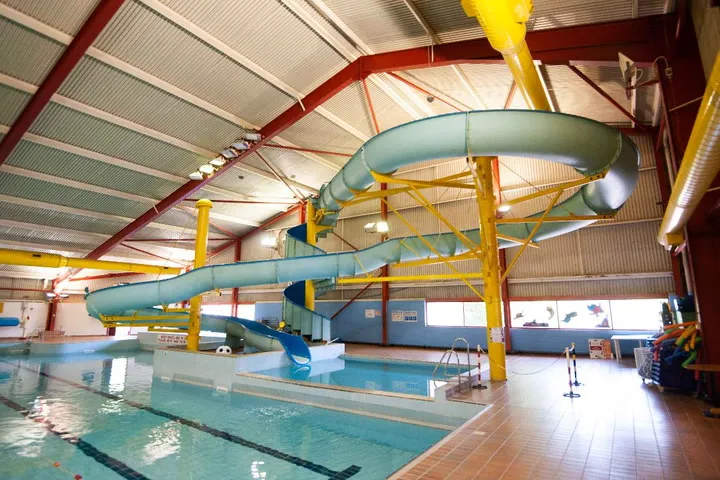 Photo: Walsall Aquatics Centre, via cdn.jwplayer.com
The supporters are mostly parents and partners, wrapped in coats despite being indoors. There's a hand-written scoreboard on a whiteboard. Someone has brought a Tupperware box of flapjacks. This, I quickly realise, is the template. Not just for water polo. For everything that follows.
British sport at this level runs on flapjacks and loyalty.
Tuesday: Kabaddi, Leicester
If you've never watched kabaddi live, I strongly encourage you to fix that immediately. The Midlands has a thriving South Asian sporting community and Leicester's kabaddi scene is fierce, noisy, and absolutely not interested in explaining itself to confused journalists who've turned up with a notebook.
The sport — which involves one player crossing into the opposing team's half, tagging as many opponents as possible while chanting 'kabaddi kabaddi kabaddi' without taking a breath, then returning — sounds absurd. It looks electric. The crowd of around two hundred people is louder than most EFL grounds I've visited. Nobody is eating flapjacks. There are samosas, though, which is an upgrade.
What strikes me is the complete absence of self-consciousness. There's no anxiety here about whether kabaddi belongs in Britain, whether it deserves more coverage, whether it's 'really' a sport. It just IS. Loudly, joyfully, on its own terms.
Wednesday: Shinty, Inverness
I drive approximately four hundred miles overnight. I regret this decision at roughly the three-hundred-mile mark somewhere north of Perth, but by the time I reach the pitch — a glorious stretch of Highland grass with mountains doing their very best in the background — I have forgiven Scotland entirely.
Shinty, for the uninitiated, is what happens when you give Celtic warriors hockey sticks and tell them there are no rules about head height. It is ferocious, skilful, and played with a sincerity that makes your chest hurt a little. The Camanachd Association has been running organised competitions since 1893. The players have day jobs. They train three times a week in the dark.
An elderly man named Donald tells me he's watched shinty for sixty-one years. I ask him why. He looks at me as though I've asked him why he breathes.
Thursday: Roller Derby, Glasgow
From ancient Highland tradition to something that looks like it was designed by a committee of punks and physicists. Glasgow's roller derby scene is enormous — several teams, multiple leagues, an atmosphere that feels like a gig crossed with a contact sport, which is essentially what it is.
The Glasgow Roller Derby bout I attend is sold out. Sold. Out. There are people in face paint. There is a DJ. The skaters have names like 'Brawl Collins' and 'Mary Queen of Scots-uppercut'. The rulebook takes twenty minutes to explain and I still don't fully understand it by the final whistle, but I am absolutely on my feet for the last three jams.
Roller derby is almost exclusively female at this level and is run almost entirely by the athletes themselves — self-organised, self-funded, self-marketed. It is, by any reasonable measure, one of the most impressive sporting communities in Britain. It receives almost no mainstream attention whatsoever.
Friday: Bowls, Eastbourne
A deliberate gear change. After the chaos of Glasgow, I need something quieter. Eastbourne's indoor bowls centre is serene, carpeted, and operates on a frequency of calm that feels almost medicinal after four days of noise.
Don't let anyone tell you bowls is a sport for people who've given up. The precision involved is genuinely breathtaking. I watch a seventy-three-year-old woman — a former county champion — deliver a bowl that curls around two blockers to sit millimetres from the jack. The concentration in her face before the delivery is identical to anything I've seen on a golf course or at a snooker table.
She shrugs when I compliment the shot. 'I've been doing it since I was forty,' she says. 'I'm only just getting started.'
Saturday: Ice Hockey, Nottingham
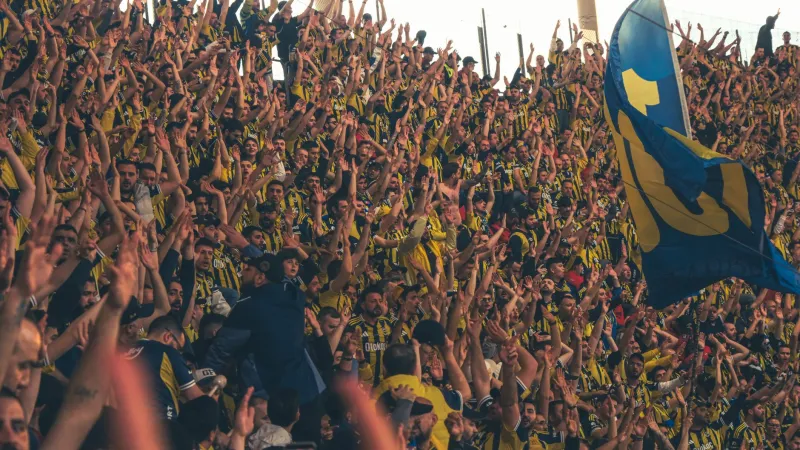
The Motorpoint Arena is genuinely loud. Like, properly, embarrassingly loud. The Nottingham Panthers have been playing since 1946 and their fanbase treats every home game like a cup final. There are air horns. There is coordinated chanting. There are children in full replica kit losing their absolute minds every time the puck crosses the blue line.
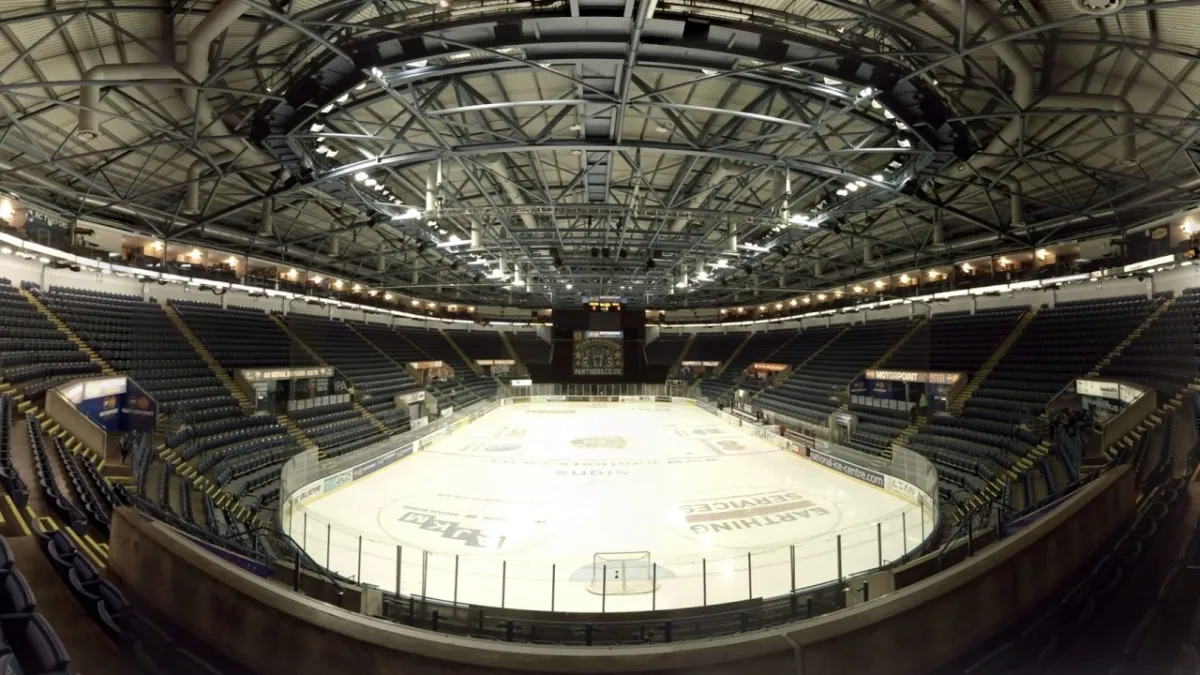 Photo: Motorpoint Arena, via i.ytimg.com
Ice hockey in Britain is a sport that has never quite broken through to the mainstream despite being faster, more physical, and more dramatic than half the sports that dominate Saturday afternoon television. The Panthers game draws six thousand fans. Six thousand. For a sport that gets roughly three minutes of national coverage per year.
Something, somewhere, has gone badly wrong with British sport media. But that's a column for another day.
Sunday: Cycle Speedway, London
I end where I started — at a community facility, on a Sunday morning, with about sixty people watching teenagers race fixed-gear bikes around a dirt oval track in Hackney. Cycle speedway. I didn't know it existed before this project. I now think it might be one of the best things I've seen all week.
The riders are between fourteen and nineteen. They race in heats of four, four laps, flat out, no brakes. The whole event is over in two hours. The parents are, once again, wearing coats and holding hot drinks. There is, naturally, a tin of biscuits.
What Did I Actually Learn?
Here's the thing about a week like this: you go in expecting to find differences and you come home thinking about similarities. The flapjacks are a metaphor, obviously. Every single one of these sports — from the Highland hillside to the Hackney dirt oval — was sustained by people who had made a choice. A stubborn, slightly irrational, deeply human choice to care about something that the wider world had largely decided wasn't worth caring about.
British sporting identity isn't a single thing. It's a thousand tiny things, happening simultaneously, mostly in the rain, almost always underfunded, and almost never on television. It is Donald watching shinty for sixty-one years. It is Brawl Collins winning a jam at midnight in Glasgow. It is a seventy-three-year-old woman in Eastbourne who is only just getting started.
If that's not a sporting identity worth celebrating, I genuinely don't know what is.