Packed Halls, Zero Cameras: The Sports Booming Across Britain That TV Has Never Bothered to Find
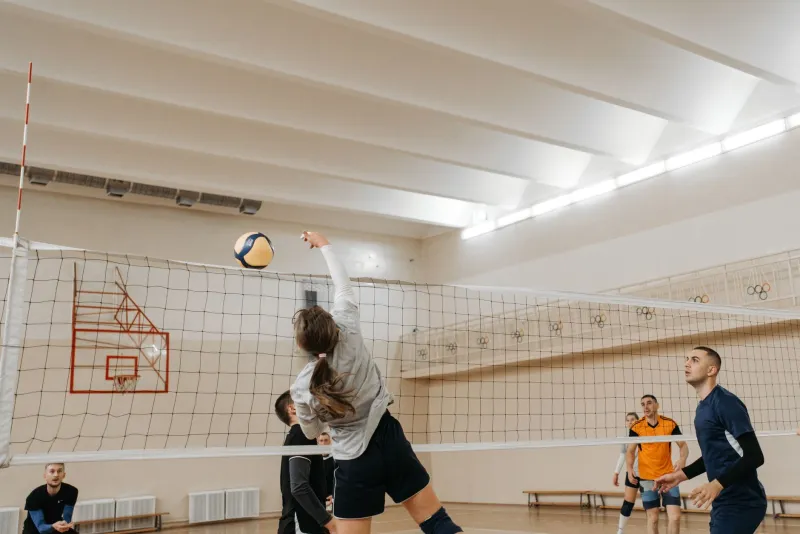
Friday night. A sports hall in Loughborough. Four hundred people crammed into a space designed for perhaps two-fifty, watching a Vitality Netball Superleague match with the kind of intensity usually reserved for cup finals and relegation deciders. There's a DJ. There's face paint. There are children in replica bibs holding handmade signs. There is, conspicuously, no television camera.
The match will not be on Sky Sports. It will not be discussed on Match of the Day. It will not feature in the Monday morning sports pages. But it will be talked about — loudly, passionately, in great detail — by the people who were in that hall, because they were there and they saw something brilliant and they'll be back next week.
This is Britain's sporting secret. And it's not much of a secret to anyone who's actually paying attention.
The Boom Nobody Reported
Let's deal with the obvious objection first. "Niche" is a word that gets used to mean "things I haven't personally watched," and it carries an implied hierarchy that's worth challenging. Netball is not niche in Loughborough, or Leeds, or London on a Friday night. Cyclocross is not niche in Yorkshire in November. Amateur wrestling is not niche in the communities where it's been a genuine cultural institution for generations.
What these sports share is not smallness. It's invisibility — specifically, invisibility to the mainstream broadcast and print media ecosystem that decides, largely for commercial reasons, what counts as real sport and what counts as background noise.
The reality on the ground tells a very different story. Vitality Netball Superleague attendances have grown consistently over recent seasons, with several clubs regularly selling out. Cycling time trials — those wonderfully British Saturday morning affairs where people in aero helmets ride very fast and very alone through rural roads while a volunteer with a clipboard times them — have seen participation surge post-pandemic. Amateur wrestling clubs across the Midlands and the North report waiting lists. Roller derby leagues are thriving in cities from Bristol to Edinburgh. Padel courts are appearing faster than planning departments can process the applications.
None of this is on your television. Most of it isn't even in your newspaper. But it's absolutely, definitively happening.
Why These Sports Are Growing While Others Stagnate
This is the genuinely interesting question. Because while established sports fret about declining youth participation, dwindling grassroots infrastructure, and the existential threat of the algorithm, these so-called niche sports are doing something that traditional ones have apparently forgotten how to do: making people feel like they belong.
Take netball. The Superleague clubs that are pulling big crowds have figured out something that Premier League football clubs — despite their billion-pound marketing budgets — sometimes struggle with. They've made the match-day experience feel like a community event rather than a product to be consumed. Tickets are affordable. The players are accessible. The atmosphere is built by the fans rather than manufactured by a PA system.
The same principle applies in cycling. A time trial event costs almost nothing to enter, welcomes riders of all abilities, and operates on a culture of radical inclusivity that makes a mockery of sports that claim to want more participants but quietly make entry feel like an audition. You turn up. You ride. You get a time. You compare it with last week's. You come back.
Wrestling clubs — and we're talking about the community amateur wrestling scene here, not the WWE cosplay that tends to dominate the cultural conversation — operate on similar principles. They are, in many cases, among the most genuinely diverse sporting spaces in Britain. They don't need a diversity strategy. They just need a mat and a coach who means it.
The Establishment Could Learn Something
Here's the uncomfortable truth for British sport's traditional power structures: these sports are not thriving despite their lack of mainstream attention. In several cases, they're thriving partly because of it.
Without television money comes freedom from television's demands. Without broadcast deals comes freedom from the scheduling chaos that has made professional football, in particular, an increasingly hostile experience for actual fans. Without the pressure to perform for cameras comes the freedom to perform for each other — which turns out to be considerably more motivating.
The netball player who gives an hour to a post-match signing session isn't doing it because her agent advised it. She's doing it because the club's culture expects it and because the fans in that hall are the reason she gets to play. That relationship — athlete and community, genuinely reciprocal — is what traditional sports have spent decades accidentally dismantling in pursuit of broadcast revenue.
There are lessons here. Proper ones. About pricing. About atmosphere. About the relationship between professional sport and the communities it's supposed to represent. About what people actually want from a Friday night out.
The Question of Coverage
None of this is to say that broadcast coverage doesn't matter. It does. The Roses match — England versus Australia in netball — drew enormous television audiences when it was broadcast. Cyclocross gets genuinely passionate online coverage from a community of fans who've built their own media ecosystem because mainstream outlets couldn't be bothered. Visibility creates participation creates growth.
But the coverage argument cuts both ways. These sports are growing without mainstream coverage, which suggests that the gatekeeping role traditionally played by broadcasters and newspapers is less powerful than those institutions like to believe. People are finding these sports through social media, through word of mouth, through the simple fact of showing up somewhere and having a brilliant time and telling someone about it.
British sport's mainstream media apparatus has a choice. It can continue to ignore the packed halls and the waiting lists and the genuine grassroots energy that these sports are generating. Or it can do the thing journalism is supposed to do — go and look at what's actually happening, rather than what's easiest to film.
Show Up
Somewhere near you, right now, something brilliant is happening. A netball league. A cycling club's Sunday morning run. An amateur wrestling evening where nobody takes themselves too seriously and everyone takes the sport extremely seriously. A roller derby bout. A padel tournament. A sport you've never watched but might, if you gave it forty-five minutes on a Friday night, fall completely in love with.
Britain's sporting soul has always been wider and stranger and more vital than the things that end up on the back pages. The pulse is there. You just have to know where to put your hand.