Play Through It: How British Sport Is Breaking Bodies and Calling It Toughness
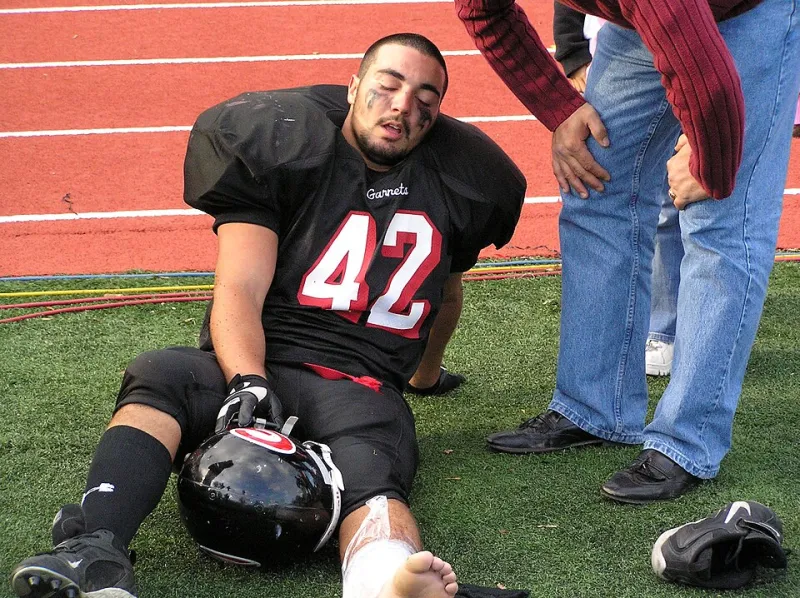
Photo: Anthony22 (talk), CC BY-SA 3.0, via Wikimedia Commons
Let's start with Tom. Not his real name — he asked us to change it — but his story is real, and it matters.
At seventeen, Tom was one of the better young footballers in his county league. A central midfielder with a decent left foot and the kind of engine that made coaches take notice. Then, in a preseason friendly, he tore a calf muscle. The physio said six weeks minimum. His grassroots club, heading into a crucial cup run, said something rather different.
"The manager didn't shout or anything," Tom tells us. "He just said, 'It's your call, son, but we really need you Saturday.' He said it every day that week." Tom played. He played the following week too. By week three, the original injury had become something worse — a partial Achilles rupture that kept him out for eight months and, he believes, permanently altered the trajectory of his development.
He's twenty-three now, playing two levels below where he was headed. "I should have said no," he says. "But when you're seventeen and your manager needs you, you say yes. That's just what you do."
The Culture That Doesn't Ask Questions
British sporting culture has a long, complicated, and often deeply damaging relationship with physical pain. The language gives it away: walk it off, run it off, rub some dirt on it. Pain is weakness leaving the body. Toughness is playing hurt. The athlete who pushes through injury is celebrated; the one who takes the recommended recovery time is quietly suspected of being soft.
This isn't just folklore. It's structural. It's baked into how coaches are trained (or not trained), how clubs communicate with players, how parents talk to their children on the sidelines, and how athletes talk to themselves in the mirror.
At the elite end, the consequences occasionally make headlines. A footballer returns from a hamstring strain three weeks too early and ruptures it completely. A cricketer bowls through a stress fracture and misses a year. These stories tend to generate sympathetic coverage before everyone moves on.
At the grassroots level, they generate nothing at all. Nobody writes about the sixteen-year-old rugby player whose knee never quite healed because his club had a county final to win. Nobody follows up on the club netball player who went back too soon after a concussion because her team was already short-handed.
What the Science Actually Says
The sports science on premature return to play is, at this point, unambiguous. Dr. Sarah Colquhoun, a sports medicine specialist who works with several British regional academies, is blunt about it.
"We know exactly what happens when soft tissue injuries aren't allowed to heal properly," she says. "The re-injury rates are dramatically higher. The recovery from a second injury is longer and more complicated. And the mental health consequences — the anxiety, the loss of confidence, the fear of movement — are often harder to treat than the physical damage."
Concussion is its own particular catastrophe. Despite World Rugby and the FA both implementing graduated return-to-play protocols, compliance at community level remains inconsistent at best. A 2023 survey by the Concussion Legacy Foundation UK found that over 40% of grassroots coaches admitted they had seen players return to training before completing the recommended protocol. Nearly a quarter said they had encouraged it.
"The protocols exist," says Dr. Colquhoun. "The problem is the culture around them. A coach can know the guidelines and still communicate in a way that makes a player feel obligated to ignore them."
The Pressure Nobody Names
What makes this particularly insidious is how rarely the pressure is explicit. Tom's manager never ordered him to play. He never threatened him. He just made his need known, repeatedly, to a teenager who desperately wanted to help his team.
This is the mechanism that operates at every level of British sport. It's not a villain twirling a moustache. It's a well-meaning coach under pressure from a chairman, or a parent who genuinely believes their child is tough enough, or a culture that has historically rewarded gritting your teeth over looking after yourself.
"I've worked with semi-professional athletes who have hidden injuries from their clubs because they were afraid of losing their place," says sports psychologist Dr. Anya Rees. "And I've worked with grassroots teenagers who were terrified to tell their coach they were in pain because they didn't want to let the team down. The emotional dynamic is the same. The power imbalance is the same. Only the money is different."
 Photo: Dr. Anya Rees, via pbs.twimg.com
The Long Tail of Getting It Wrong
The consequences extend well beyond the immediate injury. Research published in the British Journal of Sports Medicine has consistently linked premature return to play with increased rates of osteoarthritis in former athletes, particularly in the knee and ankle. For young athletes whose bones and tendons are still developing, the stakes are even higher.
Then there's the mental cost. The athletes SportsPulse UK spoke to for this piece — all of whom had experienced pressure to return too soon — described a common emotional pattern: initial relief at being back, followed by anxiety about re-injury, followed by a gradual withdrawal from the sport they once loved.
"I stopped enjoying it," says one former amateur rugby player, now thirty-one, who played through a shoulder injury at twenty-four that required surgery eighteen months later. "Every tackle, I was waiting for it to happen again. Eventually I just... stopped going."
What Needs to Change
The solutions aren't complicated, even if they're not easy. Mandatory first aid and injury management training for all youth coaches. Anonymous reporting mechanisms for athletes under pressure. Clearer club-level accountability when return-to-play protocols are ignored. A cultural shift in how we talk about pain and toughness — not just in sport, but in the language we use to raise children.
Most importantly, someone needs to say clearly and loudly what sports scientists have been saying quietly for years: playing through injury isn't brave. It's a gamble with consequences that can last decades.
Tom is still playing football. He still loves it. But he carries his injury like ballast — a constant reminder of a week when he should have said no and didn't know he was allowed to.
"I wish someone had told me it was okay to say I wasn't ready," he says. "Just that. That would have been enough."
It shouldn't take a ruined knee to learn that lesson.