Grey Areas: The Brilliant British Athletes Who Refused to Grow Old Gracefully
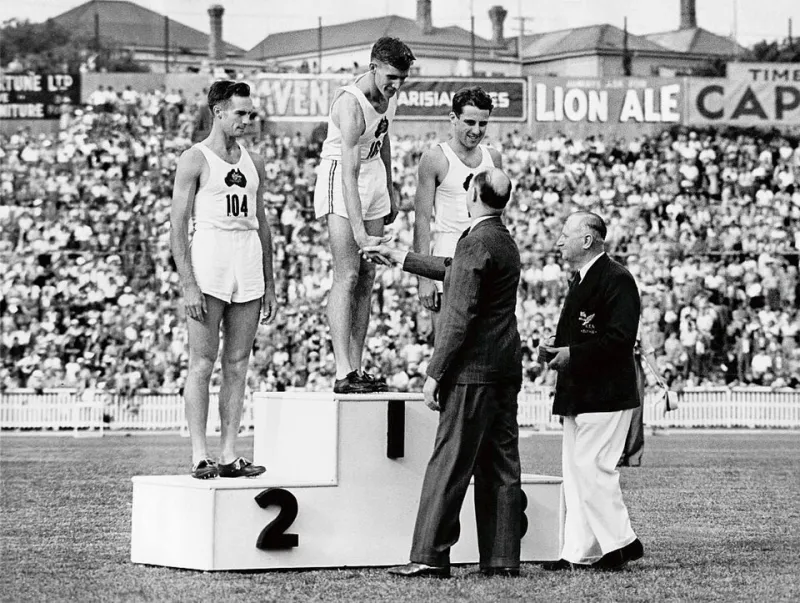
Photo: Unknown (The Age), Public domain, via Wikimedia Commons
Somewhere in the unwritten rulebook of British sport, there's a clause that reads roughly as follows: you have your moment, you enjoy it, and then you step aside with dignity so the young ones can have theirs. It's a very British idea — gracious, modest, slightly melancholy. It's also, increasingly, complete rubbish.
Because for every athlete who follows the script, there's another one who crumples it up, throws it in the bin, and goes and wins something they were never supposed to win at an age they were never supposed to win it. These are the people who fascinate us most. These are the people who deserve a proper celebration.
This is their moment.
The Age Myth in British Sport
Let's be honest about the culture first. British sport has a complicated relationship with ageing. In some corners, experience is revered — the grizzled county cricketer playing into his late thirties, the veteran rugby prop who holds the scrum together through sheer accumulated knowledge. In others, the pressure to move on is relentless and unforgiving. Footballers are routinely described as "finished" at thirty-two. Swimmers retire before they can legally rent a car. Gymnasts have sometimes peaked before their GCSEs.
The result is a system that routinely discards athletes who still have extraordinary things to offer, and then expresses surprise when those same athletes — given the right conditions, the right mindset shift, or simply the right bloody-minded refusal to accept the verdict — go and prove everyone wrong.
What's changed in recent years is that the landscape is finally, slowly, starting to accommodate them.
The Runners Who Refused to Stop
British distance running has produced some of the most remarkable late-career performances in global athletics, and the trend shows no sign of slowing. The sport's unique demands — where mental toughness, pacing intelligence, and the ability to suffer intelligently often matter more than raw physiological power — reward experience in ways that sprint events simply don't.
Veteran British marathon runners have increasingly found that their best times have come not in their mid-twenties but in their early thirties and beyond, often after periods of injury, burnout, or simply walking away and rediscovering why they ran in the first place.
"I retired at twenty-nine," says one club-level marathon runner from Leeds who asked to be identified only as Gemma. "Properly retired. Sold my racing flats. Started eating biscuits. Eighteen months later I was running again, and within two years I'd run a personal best by four minutes. I think I needed to want it again. When I came back, I was running for myself rather than for a club or a ranking. That changed everything."
Gemma's experience echoes something sports psychologists have been documenting with increasing regularity: the voluntary break, far from ending an athletic career, can reset the psychological relationship an athlete has with their sport in ways that unlock performances previously thought impossible.
When Cricket Stopped Playing Its Age
English cricket has always been a sport that tolerates — even celebrates — the older performer in ways that football and athletics rarely do. But the recent era has taken this further than perhaps any generation before it. The dramatic reconstruction of England's Test side under Brendon McCullum and Ben Stokes saw several players in their mid-to-late thirties not just retained but actively central to one of the most exciting periods in the team's modern history.
The message that sent to British sport broadly was significant: experience, when combined with a genuine cultural shift in how a team operates, isn't baggage. It's architecture.
At county level, the same story plays out every summer. Batters who were written off at thirty-five find that the reduction in schedule pressure, the freedom from England selection anxiety, and the simple pleasure of playing well for its own sake can add years of high-quality performance. Several counties have quietly developed informal policies around retaining experienced players longer precisely because they've seen the dressing room value that youth-obsessed recruitment strategies tend to underestimate.
The Cycling Renaissance
British cycling's extraordinary recent history has produced more than its share of comeback stories, and the sport's physiology makes it uniquely forgiving of age. Aerobic capacity declines gradually. Technical skill and race intelligence — the ability to read a peloton, to choose a moment, to manage effort across a six-hour stage — actually improve with experience.
Several British riders who stepped away from professional cycling in their early thirties — citing burnout, team politics, or simply the grinding relentlessness of the European race calendar — have returned to competition at domestic and international level with results that surprised even their closest supporters. The growth of gravel racing, endurance cycling, and the broader sportive culture in Britain has created entirely new competitive arenas where athletes in their forties are not just participating but genuinely competing at the sharp end.
"The sport I came back to wasn't the sport I left," says one former professional who now races the domestic circuit in his early forties. "Gravel riding, endurance events — these disciplines value different things. I'm not trying to sprint up a mountain at thirty-eight. I'm trying to ride intelligently for twelve hours. That, I can do. That, I might actually be better at now than I was at twenty-six."
What the Comeback Merchants Know That the Rest of Us Don't
Talk to enough British athletes who've successfully written second acts and certain themes recur with striking consistency. The absence of external pressure — whether from selectors, sponsors, or simply the weight of youthful expectation — is almost universally cited as liberating. The ability to define success on their own terms, rather than against the benchmarks imposed by a system built for twenty-two-year-olds, allows older athletes to approach competition with a freedom that their younger selves rarely possessed.
There's also, almost always, a reckoning with identity. Many athletes who come back successfully describe having gone through a period of genuinely not knowing who they were without sport — and then discovering that the person who emerged from that process was, paradoxically, a better athlete. Shorn of the desperate need to perform, they perform better.
"I used to train because I was terrified of failing," says Gemma. "Now I train because I love running. It sounds like a cliché. But the times don't lie."
British sport, for all its occasional cruelty toward those who dare to age, has always had a soft spot for the underdog. And what is the returning veteran if not the ultimate underdog — the one who was counted out, who heard the whispers, who saw the door closing, and decided to knock it back down?
Grey areas, it turns out, are exactly where the best stories live.