No Badge, No Pay, No Problem: The Women Quietly Holding British Sport Together
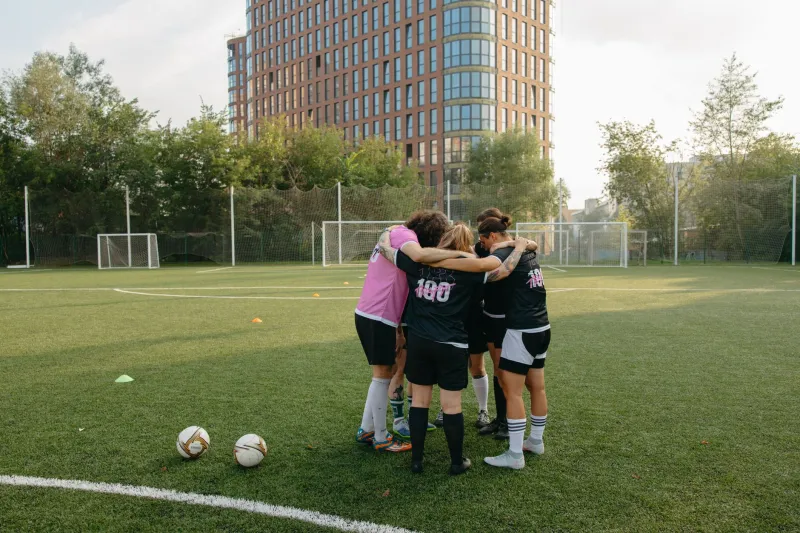
Somewhere in a leisure centre car park in Stoke-on-Trent, at half past seven on a Tuesday evening, Karen is dragging a bag of bibs out of the boot of her Nissan Micra. She's been at work since eight. She's got a cold she hasn't had time to acknowledge. And she's about to spend the next two hours coaching fifteen teenagers through netball drills in a sports hall that smells faintly of old trainers and broken promises.
Karen doesn't have a coaching contract. She doesn't have a sponsor. She doesn't have a documentary crew following her about or a performance director checking in on her wellbeing. What she has is a Level 2 coaching badge she paid for herself, a clipboard she bought from Ryman's, and an unshakeable belief that these kids deserve better than an empty sports hall and a cancelled session.
There are thousands of Karens across Britain. And almost nobody is talking about them.
The Invisible Infrastructure
Strip away the Premier League glamour, the BBC Sports Personality ceremony, the Olympic medal ceremonies and the carefully curated Instagram feeds of Britain's elite athletes — and what's left is a vast, creaking, largely female-run network of volunteers who are, in the most literal sense, keeping the lights on.
According to Sport England's own research, women make up the majority of volunteer hours in community sport. They run the junior football clubs. They coordinate the swimming galas. They book the pitches, chase the subs, organise the kit, chase the subs again, and then chase them a third time because Dave still hasn't paid for March.
They do this, overwhelmingly, for free.
The sporting establishment — governing bodies, councils, national lottery distributors — knows this. It has known it for years. And yet the response has been, at best, the occasional awareness campaign and, at worst, a complete structural indifference that borders on the insulting.
Why They Do It
Ask any grassroots coach why they give up their evenings and weekends for zero financial reward and you'll get versions of the same answer. It's about the kids. It's about the community. It's about giving something back.
But spend a bit more time with them and something else emerges — a quiet fury at being taken for granted. A frustration that their expertise, their hours, their emotional labour are simply assumed to be available, indefinitely, without question.
Sarah runs a junior athletics club in Huddersfield. She's been doing it for eleven years. In that time, she's helped develop three athletes who've gone on to compete at national level. She's never been invited to a governing body meeting. She's never been consulted on policy. She received one email from England Athletics that began with 'Dear Volunteer' and included a link to a webinar she didn't have time to attend.
"I don't need a trophy," she says, laughing in the way people laugh when they're not entirely joking. "I just want someone to occasionally acknowledge that without people like me, there is no pipeline. There is no sport."
She's not wrong.
The Sponsorship Black Hole
Here's where it gets particularly galling. British sport is awash with sponsorship money — at the top. Kit deals, naming rights, broadcast partnerships, energy drink endorsements. Billions, collectively, flowing into elite sport every year.
At grassroots level? A five-hundred-pound grant from the local council, if you're lucky, and a raffle at the Christmas social.
The women coaching community sport are not just underfunded. They're structurally excluded from the funding conversation. Sponsorship at that level goes to clubs with media profiles, social media followings, and someone who knows how to write a deck. The woman running a junior girls' football team in Rotherham doesn't have a media profile. She has a laminator and a dream.
Governing bodies will tell you they have community investment programmes. They'll point to small grants and volunteer recognition schemes. And some of those schemes are genuinely useful. But they're sticking plasters on a wound that needs surgery.
What Needs to Change
The solutions aren't complicated. They're just inconvenient for organisations that would rather spend their time managing elite pathways and broadcast rights negotiations.
First, pay people. Not necessarily full salaries — though that would be transformative — but meaningful stipends that acknowledge expertise and time. Coaching is a skill. Treat it like one.
Second, include grassroots coaches in the rooms where decisions get made. Not as an afterthought. Not as a diversity box to be ticked. As genuine stakeholders whose knowledge of what actually happens at community level is irreplaceable.
Third, direct sponsorship properly. There are companies — local businesses, regional brands — who would happily put their logo on a bib bag if someone made it easy and compelling to do so. Nobody's building that bridge.
Fourth, and perhaps most importantly, stop treating volunteerism as a personality trait rather than a structural function. These women aren't doing this because they have nothing better to do. They're doing it because someone has to, and the system has arranged itself so that it falls to them.
The Pulse at the Bottom
British sport loves a good origin story. The kid from a rough background who made it. The underdog club that punched above its weight. The inspiring journey from park pitch to Olympic podium.
What those stories always skip is the chapter with Karen in the car park, dragging the bibs out of the Micra in the rain.
She's the beginning of every single one of those journeys. She's the reason the journey starts at all. And until the sporting establishment genuinely reckons with that — not in a press release, not in a panel discussion at a conference nobody grassroots attends, but in actual policy and actual money — we're running a system that survives only because a particular kind of person is willing to be exploited by it.
Britain's grassroots sport doesn't have a talent problem. It doesn't have an enthusiasm problem. It has a recognition problem. And fixing it starts with knowing Karen's name.