Ice, Ice, Maybe: The British Sports Clubs That Absolutely Love It When the Cold Bites Back
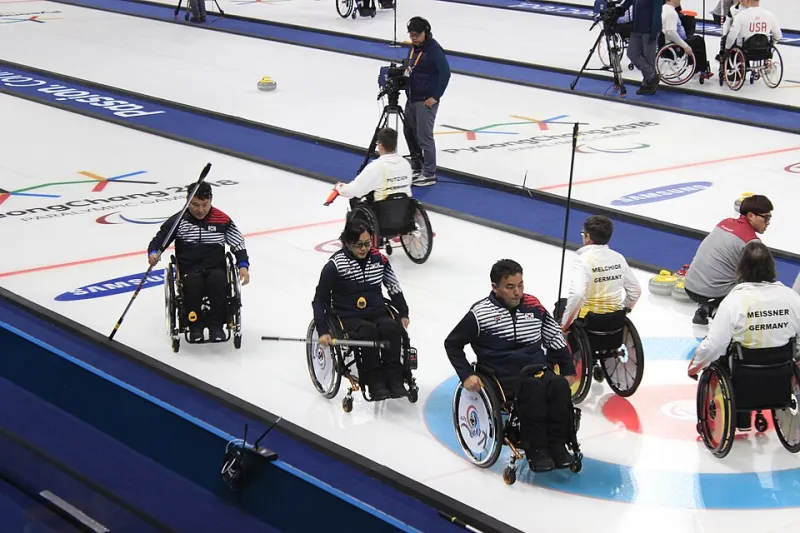
Photo: Trainholic, CC BY-SA 3.0, via Wikimedia Commons
There is a specific kind of British person who hears a weather forecast predicting minus four and feels something that can only be described as joy. Not the grim, stoic satisfaction of someone who has remembered where they put their good coat. Genuine, anticipatory, almost childlike joy.
You'll find them at curling clubs in Perth. At ice speedway tracks in Sheffield. At frozen lochs in the Highlands where people have been playing curling since before central heating was invented. At bandy pitches in places most football fans couldn't find on a map.
While the rest of British sport is cancelling fixtures, pumping out pitches, and issuing apologetic social media posts about waterlogged conditions, these communities are pulling on their thermals and heading out the door with a spring in their step.
This is their story.
The Stone Cold Truth About Curling
Let's start with the sport that Britain occasionally remembers it's quite good at, usually every four years when the Winter Olympics rolls around and someone on breakfast television has to explain what a 'hog line' is.
Curling in Scotland is not a niche pursuit. It is a deeply embedded cultural institution. The Royal Caledonian Curling Club — the sport's governing body in Scotland — was founded in 1838 and still operates out of Edinburgh. Scotland has more dedicated curling facilities than the rest of Britain combined, and the sport's community is, by the standards of minority British sport, remarkably healthy.
 Photo: Royal Caledonian Curling Club, via 2.bp.blogspot.com
What makes curling fascinating from a winter-sport perspective is the way cold weather functions not as an obstacle but as infrastructure. The sport literally requires it. When temperatures drop, curling clubs don't worry about fixture cancellations — they celebrate, because their artificial ice runs better, their outdoor bonspiels become possible, and their membership numbers typically spike as people who've been meaning to try it finally turn up.
Perthshire, in particular, operates as a kind of curling heartland. The sport here is genuinely multigenerational — clubs routinely field players ranging from teenagers to octogenarians in the same competition, which is almost unique in British sport and produces a community dynamic that's quite unlike anything you'll find at a football ground or a tennis club.
'People think it's a gentle sport,' one Perth club captain told me. 'Then they try to throw a twenty-kilo stone with precision from forty-two metres away and wonder why their back hurts.'
Ice Speedway: Britain's Most Underrated Winter Spectacle
If curling is the thoughtful, strategic face of British winter sport, ice speedway is its unhinged, spike-tyred cousin.
For context: ice speedway involves motorcycles fitted with tyres covered in steel spikes, racing around an oval ice track at speeds that would be alarming on tarmac and are genuinely terrifying on a frozen surface. It is spectacular, loud, occasionally terrifying, and almost entirely unknown outside of the communities that love it.
Sheffield has been one of the heartlands of British ice speedway for decades. The Sheffield Tigers have competed at the top level of European ice speedway, which is a sentence that surprises most people who discover it for the first time. The sport is enormous in Scandinavia and Russia; in Britain, it occupies a peculiar position as a genuine specialist sport with a passionate and knowledgeable fanbase that has essentially decided it doesn't need mainstream validation.
Attend an ice speedway event in January and you'll find a crowd that is deeply, almost aggressively knowledgeable. These are not casual observers. They understand the tyre technology, the track preparation, the tactical nuances of a sport that most people have never heard of. The cold is part of the experience — the breath clouds, the frozen grandstand railings, the hot drinks that cool too fast — and the community that forms around shared extremity is tight-knit in a way that more comfortable sports rarely achieve.
Why Cold Weather Builds Better Communities
This is worth dwelling on, because it's not just anecdotal. There's something genuinely interesting happening in sports that operate at the margins of comfort.
When you remove the casual attendee — the person who'll come when it's nice but won't bother when it's minus two — you're left with the committed core. And committed cores, over time, build extraordinary communities. They develop rituals. They look after each other. They create the kind of institutional memory and collective identity that warm-weather sports, with their fluctuating attendances and fair-weather followers, sometimes struggle to sustain.
Curling clubs in Scotland regularly report that their tightest social bonds form not at summer socials but at January bonspiels, when everyone is cold and tired and relying on each other to keep things running. Ice speedway fans describe a similar phenomenon — the shared experience of standing in the cold, watching something extraordinary, creates connections that outlast the event itself.
There's a reason the best winter sport communities in Britain tend to be the most loyal ones. Adversity, it turns out, is excellent social glue.
Bandy: The Sport Britain Keeps Almost Discovering
Bandy is, depending on your perspective, either a sport that Britain has inexplicably failed to embrace or a sport that is quietly building a foundation that will eventually produce something significant. Played on a full-sized ice surface with a ball rather than a puck, it looks like a hybrid of football and ice hockey and is enormous in Russia, Scandinavia, and parts of Central Asia.
In Britain, bandy exists in a small number of pockets — primarily in Scotland and the north of England — where enthusiasts have been building the sport from essentially nothing. The British Bandy Federation is a young organisation working with very limited resources, but the sport's growth trajectory is interesting.
Critically, bandy is a winter sport in the purest sense: it requires cold, it rewards cold, and it attracts the kind of athlete who actively relishes outdoor winter conditions. In a country that has historically been ambivalent about embracing winter sport as anything other than a spectator activity, bandy represents a small but genuine counterculture.
The Warm Heart of Cold Sport
Here's the paradox at the centre of all of this: the coldest British sports communities are, consistently, the warmest.
Walk into a curling club in Perth in January and you will be offered a warm drink within four minutes. Attend an ice speedway event in Sheffield and you will be talked to by a stranger who assumes, correctly, that you share a specific kind of enthusiasm. Turn up at a bandy session in Edinburgh and you will be handed equipment and pointed at the ice before you've fully processed what you've agreed to.
These communities have learned, through decades of operating outside the mainstream, that warmth has to be generated internally. When the weather won't give it to you and the television cameras won't come, you build it yourself — through hospitality, through shared experience, through the particular bond that forms between people who have all independently decided that being freezing cold on a Tuesday evening is, actually, exactly where they want to be.
British winter sport is not a footnote. It is, for the people who love it, the whole story. And right now, as the temperature drops and the rest of sport retreats indoors, they are absolutely in their element.
Let it snow.