Move Over Veterans — The Teenagers Are Here and They're Not Waiting Their Turn
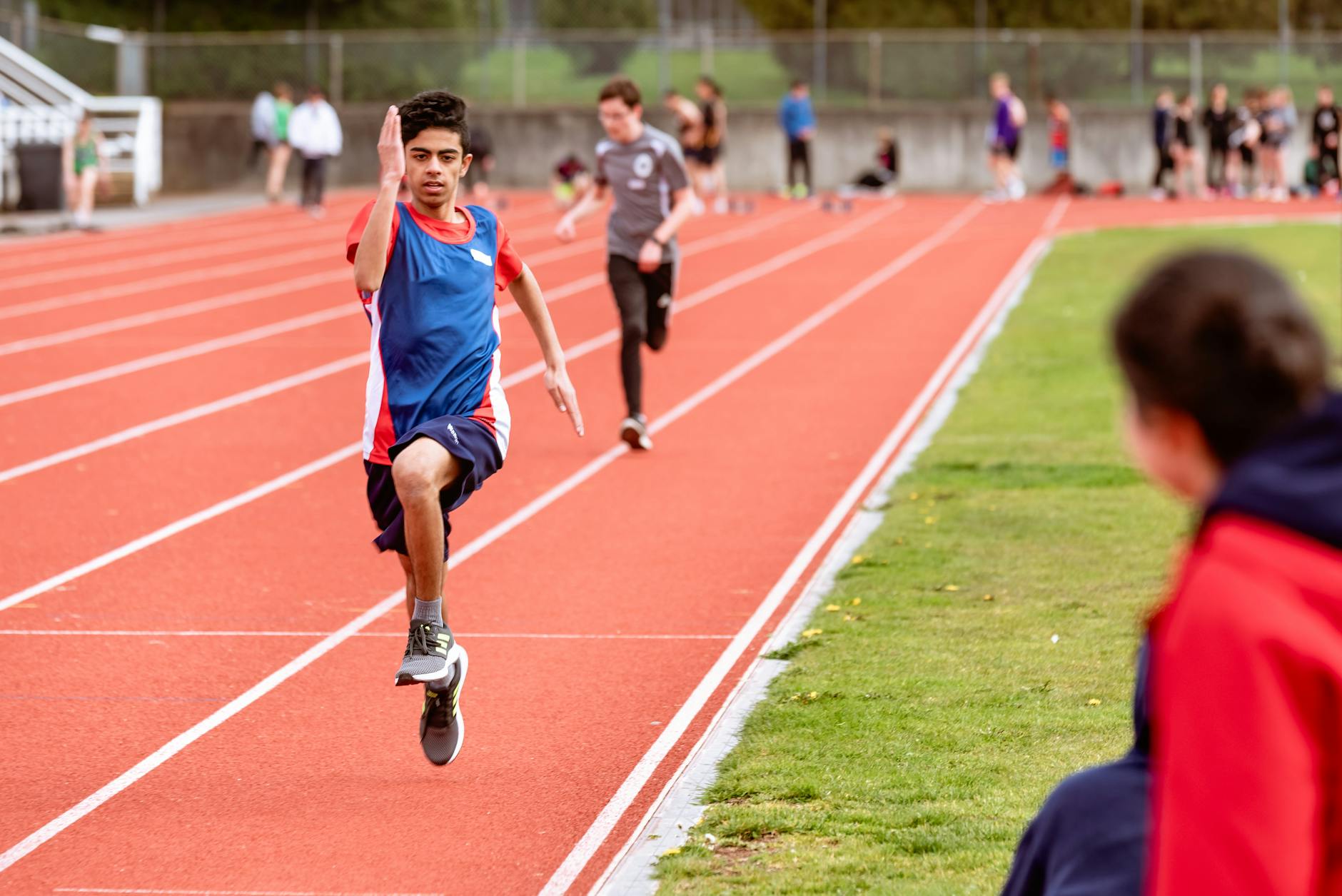
Move Over Veterans — The Teenagers Are Here and They're Not Waiting Their Turn
By Jamie Hartwell | SportsPulse UK
There's a moment in sport when you realise the script has been completely torn up. When someone so young, so fresh-faced, so unbothered by the weight of expectation steps onto the biggest stages and just... performs. Not nervously. Not tentatively. Dominantly.
We're living through one of those moments right now — except it's not a moment, it's a movement.
A wave of teenagers across virtually every major sport is dismantling age-related records at a pace that's frankly making statisticians sweat. And the really wild part? These kids aren't treating milestones as destinations. They're treating them as warm-ups.
The Numbers Don't Lie — They Terrify
Let's just take a breath and look at what's been happening. In athletics, swimming and cycling, the volume of under-18 world records broken or seriously threatened in the last three years is genuinely unprecedented. In tennis, we've seen teenagers ranked inside the top 50 of both tours with a swagger that would've seemed absurd a decade ago. Football? Don't even get me started. The average age of breakout players in Europe's top five leagues has been trending younger almost every single season.
This isn't coincidence. This is a structural shift.
Sports scientists will tell you part of the explanation is physiological. Modern training methodologies are far more sophisticated than what existed even fifteen years ago. Periodisation — the science of carefully managing an athlete's training load across weeks, months and years — has evolved dramatically. Young athletes are being developed smarter, not just harder. Recovery protocols, nutrition planning, biomechanical analysis: all of it is being applied earlier in athletic careers than ever before.
But here's the thing that doesn't get talked about enough: these teenagers also have access to something that no previous generation had at their age. Endless, high-quality footage of the world's best athletes, available on demand, for free, on a device in their pocket.
TikTok Taught Them Technique (Seriously)
Social media gets a bad press in sport — and sometimes fairly so. But let's give credit where it's due. Platforms like YouTube, Instagram and yes, TikTok, have created an entirely new ecosystem of athletic education. A fifteen-year-old in Manchester can study Rafael Nadal's footwork in slow motion. A sixteen-year-old sprinter in Birmingham can break down Marcell Jacobs' start mechanics frame by frame.
This kind of visual learning, combined with access to online coaching communities and data-sharing platforms, means talented young athletes are arriving at elite academies and clubs already technically polished in ways that used to take years of professional coaching to achieve.
They're not starting from scratch. They're starting from somewhere most previous generations didn't reach until their mid-twenties.
And then there's the mental side. Growing up in the social media age, for all its obvious downsides, has created a generation of young athletes who are remarkably comfortable performing under a public gaze. The pressure of a big match or a major final? They've been navigating public scrutiny, comment sections and viral moments since they were twelve. The lights don't blind them the way they used to blind previous generations of young talent.
Veterans Are Evolving — Or Disappearing
Here's where it gets genuinely fascinating from a sporting culture perspective. The rise of these teenage phenoms isn't just producing new stars — it's forcing established veterans to completely rethink how they operate.
In tennis, you can see it clearly. Players who would've comfortably coasted through the later stages of their careers on experience and consistency alone are now having to reinvent their games because teenagers are matching them physically AND technically. The veterans who've survived — and thrived — are the ones who've embraced data, adapted their styles and refused to be nostalgic about methods that no longer work.
In football, experienced midfielders and defenders are leaning harder into leadership and tactical intelligence because raw physical competition with nineteen-year-olds is increasingly a losing battle. It's not decline — it's adaptation. But make no mistake, it's being forced upon them.
Darwin's theory, applied to sport: evolve or become irrelevant.
So Who's Going to Be Great? Bold Predictions Time
Alright, this is the bit where I stick my neck out — because what's the point of an opinion piece if you're not willing to make some calls?
In tennis, the names bubbling under the radar in junior circuits right now suggest that within five years, we'll have at least two or three players capable of genuinely challenging Grand Slam records that currently feel untouchable. The serve speeds, the court coverage, the mental composure — it's all there in embryonic form.
In track and field, the sprint events in particular feel like they're on the cusp of something seismic. There are teenagers clocking times in national junior competitions that would've been competitive at senior World Championships not long ago. One or two of them will, I'm confident, rewrite the record books within a decade.
Football is trickier because the team sport element makes individual greatness harder to predict. But I'll say this: the teenage forwards currently lighting up youth competitions across Spain, France and England include at least one player who, barring injury, has the profile to become genuinely generational. The movement, the finishing, the football intelligence — it's different.
GOAT-level different.
The Uncomfortable Truth for Sports Culture
There's one final thing worth saying, because it's important and it doesn't always get acknowledged honestly.
Not every teenage prodigy makes it. For every player who lives up to the hype, there are ten whose development stalls, whose bodies give out, or who simply couldn't handle the psychological weight of expectation. The system that produces these extraordinary young athletes also chews some of them up, and that's a conversation sport needs to keep having loudly and urgently.
The science that accelerates development must also protect it. The platforms that amplify young talent must also allow space for failure and growth away from public judgment. The fans and media — us included — need to celebrate without suffocating.
But none of that diminishes what's happening. Right now, in 2024 and beyond, sport is being reshaped by a generation that simply refuses to wait. They're not asking permission to be great.
They're just getting on with it. And honestly? It's absolutely brilliant to watch.
Jamie Hartwell writes opinion and features for SportsPulse UK. Follow him for takes that are occasionally wrong but never boring.