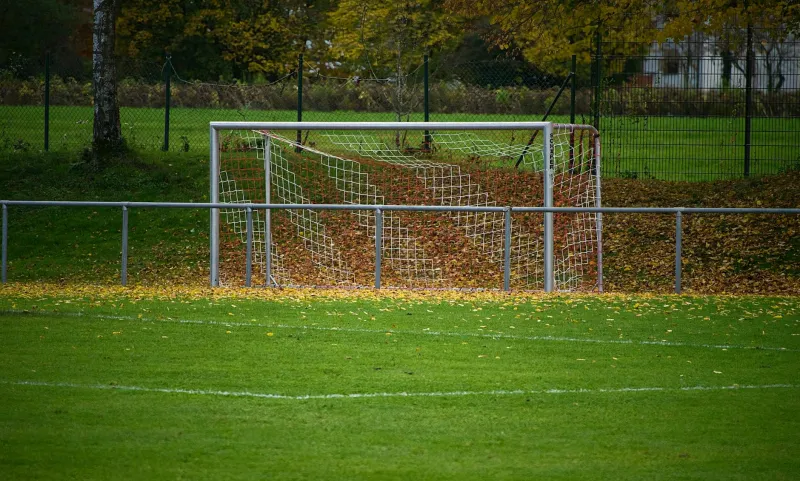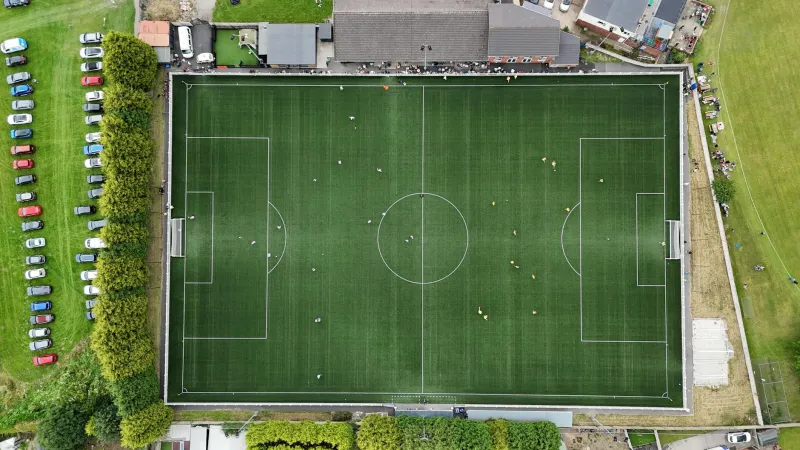
Every Tuesday evening, Gary Thompson loads his car with corner flags, training cones, and a portable goal that's seen better decades. He's not heading to his club's training ground – Riverside Athletic FC doesn't have one. Instead, he's off to negotiate with a school caretaker, sweet-talk a parish council, or set up on whatever patch of grass hasn't been double-booked by another homeless team.
"People think we're a proper football club," laughs Thompson, who's been secretary of the Hertfordshire outfit for eight years. "We've got a league position, a kit sponsor, and 22 registered players. What we don't have is anywhere to call home."
Riverside Athletic represents a hidden crisis in British sport: the clubs that exist entirely at the mercy of others' goodwill, playing a constant game of musical venues just to survive.
The Great Ground Shuffle
Across Britain, hundreds of sports clubs operate without owning a single blade of grass. They're the sporting equivalent of hermit crabs, constantly searching for new shells as old arrangements fall through. Football teams that train on school fields until the groundsman gets fed up. Cricket clubs whose "home" venue changes annually based on council availability. Hockey teams who've played at six different grounds in three seasons.
The numbers tell a sobering story. The Football Association estimates that over 400 clubs in their pyramid system don't have permanent grounds. In rugby, the figure approaches 200. Cricket's groundless clubs number in the dozens, while hockey, netball, and other sports add hundreds more to the tally.
"We're like sporting gypsies," admits Rachel Morrison, captain of Middleton Ladies Hockey Club. "Three seasons ago we played at the leisure centre. Last season it was the grammar school. This season we're at the comprehensive, but only until their Astroturf gets resurfaced. Then we're back to square one."
The Logistics Nightmare
Operating without a permanent base transforms simple tasks into complex operations. Home fixtures become elaborate planning exercises involving multiple phone calls, backup venues, and contingency plans for when the original arrangement falls through.
Chairman of Brookside Cricket Club, Martin Walsh, keeps a spreadsheet that would impress NASA mission controllers. "I've got primary venues, secondary options, and emergency alternatives for every fixture. I know which school fields flood in light rain, which council pitches get double-booked, and which farmer might let us use his paddock if we're really desperate."
The psychological impact on players can't be underestimated. There's no home advantage when you're not sure where home is. No familiar changing rooms, no supportive groundsman who knows how you like the pitch prepared, no sense of territorial pride that comes with defending your own turf.
"Our players never know where they're going until the day before," explains Morrison from the hockey club. "We've turned up to grounds that were locked, double-booked, or had been turned into car boot sales. You learn to pack bolt cutters and a sense of humour."
The Cascade Effect
Ground insecurity creates a cascade of problems that extend far beyond match day. Youth development suffers when training venues change monthly – kids lose interest when they can't find where they're supposed to be. Recruitment becomes impossible when you can't promise potential players a stable base.
Sponsorship deals collapse when businesses realise their boards won't be permanently displayed anywhere. Equipment storage becomes a constant headache – how do you maintain goalposts when you don't have anywhere to keep them? Some clubs resort to dismantling and rebuilding their infrastructure for every fixture.
"We've lost three youth teams in two years," admits Thompson from Riverside Athletic. "Parents get fed up with the uncertainty. They want their kids training at the same place, same time, every week. We can't guarantee that, so they go to clubs that can."
The Council Cuts Crisis
Local authority budget cuts have accelerated the crisis. Playing fields that once welcomed community clubs are being sold for development or left unmaintained. School playing fields, traditionally a backup option, face increasing restrictions as educational institutions become more risk-averse and commercially minded.
"We used to have five regular pitches we could rotate between," explains Walsh from Brookside Cricket. "Two have been sold to housing developers, one's been turned into a car park, and the school that let us use their field now charges £200 per match. We're running out of options."
The irony is palpable: as government policy promotes grassroots sport and community health, the infrastructure supporting both continues to disappear. Clubs find themselves in the absurd position of being encouraged to grow while their foundations are systematically removed.
Innovation Through Desperation
Yet from this chaos has emerged remarkable innovation. Groundless clubs have become masters of adaptability, developing portable solutions that would impress military logistics experts. Pop-up changing rooms constructed from gazebos and tarpaulins. Training equipment designed to fit in car boots. Fixture lists that read like tour schedules.
Some clubs have embraced their nomadic status, turning ground-hopping into a positive. "We've played in more venues than most professional teams," boasts Morrison. "Our players are adaptable – they can perform on any surface, in any conditions. There's something to be said for that."
Technology has become an unexpected ally. WhatsApp groups coordinate last-minute venue changes. GPS apps guide players to obscure locations. Online booking systems help clubs grab cancelled slots at council facilities.
The Community Cost
But innovation can't replace the community connection that comes with a permanent home. Clubs without grounds struggle to build local identity, to become embedded in their neighbourhoods, to create the generational loyalty that sustains grassroots sport.
"A football club should be part of its community's fabric," argues Thompson. "How can you be that when you're never in the same place twice? We're like a travelling circus, except less profitable and with worse costumes."
The psychological impact extends beyond players to volunteers. Club secretaries become expert negotiators and logistics coordinators when they should be focusing on sport. Treasurers juggle multiple facility hire agreements instead of planning development programs.
The Long-Term Threat
Without intervention, the ground crisis threatens to hollow out grassroots sport from within. Clubs may survive in name, but they lose the stability needed for genuine development. The next generation of players grows up without the community connection that traditionally sustained amateur sport.
"We're one bad season away from folding," admits Walsh. "Not because we lack players or passion, but because we can't find anywhere to play. It's heartbreaking."
Finding Solutions
Some clubs have found creative partnerships. Riverside Athletic now shares facilities with a rugby club, alternating seasons and splitting maintenance costs. Others have formed cooperatives, pooling resources to lease grounds collectively.
Government intervention could help – tax incentives for landowners who provide sporting facilities, grants for clubs to secure long-term leases, protection for existing playing fields. But solutions require recognition that the problem exists.
The Deeper Question
The plight of groundless clubs raises fundamental questions about British sport's future. In a country that prides itself on sporting heritage, how sustainable is a system where clubs exist at the mercy of others' generosity?
These homeless heroes continue their weekly migrations, setting up goals in car parks and marking pitches with whatever comes to hand. They represent both the resilience and the vulnerability of grassroots sport – communities determined to play regardless of obstacles, but communities that deserve better than constant uncertainty.
Their stories remind us that sport isn't just about the ninety minutes between kick-off and final whistle. It's about belonging somewhere, defending something, calling a place home. For too many British clubs, that fundamental human need remains frustratingly out of reach.
Until we address the ground crisis, we're asking these sporting nomads to build something permanent on foundations of sand. They'll keep trying – that's what makes them heroes. But they shouldn't have to.