The Over-40s Uprising: Why Britain's Middle-Aged Athletes Are Rewriting the Retirement Rulebook
The Revolution Nobody Saw Coming
At 47, Helen Richardson is faster in the pool than she was at 27. At 52, Marcus Webb is still the best centre-back in his Sunday league division. At 43, Jenny Collins just qualified for her first-ever international triathlon competition.
 Photo: Helen Richardson, via 1.bp.blogspot.com
They're not anomalies. They're the advance guard of a sporting revolution that's quietly unfolding in leisure centres, running tracks, and football pitches across Britain. While the sporting establishment obsesses over identifying the next teenage prodigy, a generation of forty and fifty-somethings is busy proving that peak performance doesn't come with an expiry date.
The Science of Sporting Stubbornness
Dr. Amanda Foster, who studies masters athletics at Loughborough University, isn't surprised by this phenomenon. "We've fundamentally misunderstood how ageing affects athletic performance," she explains. "Yes, raw physical capacity declines, but experience, technique, and mental strength can more than compensate."
 Photo: Loughborough University, via univerlist.com
The numbers back her up. British masters swimming has seen participation double in the past decade, with age-group world records tumbling regularly. The over-40s category in parkrun is the fastest-growing demographic. Sunday league football is experiencing a boom in veteran players who refuse to hang up their boots.
"What we're seeing is the first generation that's been physically active throughout their lives hitting middle age," Foster continues. "They're not starting from scratch at 45—they're building on decades of conditioning."
The Sunday League Survivors
Nowhere is this trend more visible than on Britain's grassroots football pitches. Walk around any Sunday league ground and you'll spot them: the silver-haired striker still finding the net, the 50-year-old midfielder who reads the game like a chess master, the veteran goalkeeper whose reflexes might have slowed but whose positioning has become telepathic.
Tony Mitchell, 48, has been playing Sunday league football in Birmingham for three decades. Far from winding down, he's arguably in his prime. "I'm not as quick as I was, but I know where the ball's going before the 20-year-olds do," he grins. "Experience is the great equaliser."
His team-mates agree. Captain Steve Barnes, himself no spring chicken at 44, explains: "The young lads have the legs, but Tony's got the brain. He'll be playing when he's 60, mark my words."
The Pool Powerhouses
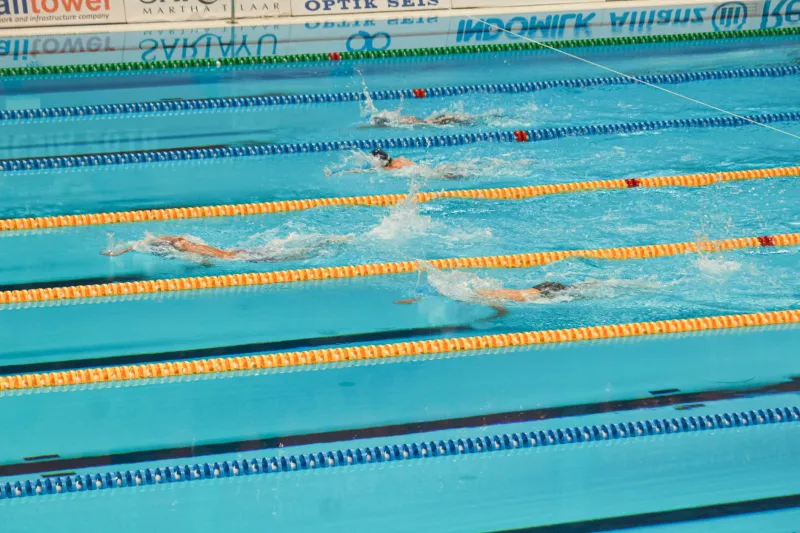
Masters swimming tells an even more remarkable story. At Ponds Forge in Sheffield, the 6am session is dominated by swimmers in their forties, fifties, and beyond. They're not gentle exercise swimmers—they're serious athletes posting times that would embarrass their younger selves.
 Photo: Ponds Forge, via bridgwaterswim.co.uk
Carol Wright, 53, recently broke the British record for 50m butterfly in her age group. "I was a decent club swimmer in my teens, but nothing special," she recalls. "I came back to the sport at 40 after my kids grew up, and I'm swimming faster now than I ever did as a teenager."
Her coach, former Olympian Mark Stevens, has seen this pattern repeatedly. "These masters swimmers have something the young ones often lack—patience and precision. They've learned that technique trumps power, and consistency beats intensity."
The Mental Game Changers
What separates successful veteran athletes from those who fade away isn't physical—it's psychological. They've learned to listen to their bodies, to train smart rather than hard, and to find motivation in improvement rather than comparison.
Psychologist Dr. James Harrison, who works with veteran athletes, identifies several key factors: "They're not trying to prove anything to anyone else. They're competing against their own expectations, which removes enormous pressure. Plus, they've developed coping strategies for setbacks that younger athletes haven't."
This mental resilience shows up in competition. Veteran athletes are less likely to crack under pressure, more likely to stick to race plans, and better at managing the psychological demands of long-season sports.
The Technology Factor
Modern sports science has also levelled the playing field. Recovery techniques, nutrition knowledge, and injury prevention methods that were once elite-level secrets are now freely available. Veteran athletes are often more disciplined about applying this knowledge than their younger counterparts.
"A 20-year-old might skip the warm-up or ignore the recovery protocols," notes physiotherapist Sarah Kumar, who works with masters athletes in Manchester. "A 45-year-old knows they can't get away with that. They're often better athletes because they have to be more professional."
The Community Connection
Perhaps most importantly, veteran athletes have rediscovered what many elite sports have lost: the joy of participation. Without professional aspirations or parental pressure, they're free to pursue sport for its purest reasons.
"It's liberating," explains marathon runner David Chen, who returned to competitive running at 42. "I'm not trying to make a living from this or impress scouts. I'm running because I love it, and that freedom is incredibly powerful."
This joy is infectious. Veteran-heavy sports clubs often report better atmospheres, stronger community bonds, and higher retention rates than their youth-focused counterparts.
The Future of Forever
As this generation continues to defy sporting stereotypes, they're paving the way for an entirely new approach to athletic careers. The traditional model—peak in your twenties, decline in your thirties, retire in your forties—is being systematically dismantled.
"We might be looking at the first generation of truly lifelong athletes," suggests Dr. Foster. "People who maintain competitive standards well into their sixties and beyond. It's exciting and slightly terrifying for those of us who study this stuff."
For the athletes themselves, the future is simpler. They'll keep competing until they don't want to anymore, and that day seems to be getting further and further away.
As Helen Richardson puts it, adjusting her goggles before another training session: "They can keep their teenage phenoms. We'll be over here, proving that the best is yet to come."