The 5am General
Margaret Henley arrives at Oldham Athletic's training ground every morning at 5am. Not because she's the manager, the captain, or even a player. She's the groundskeeper, and at 62, she's been nurturing grass pitches longer than most of the current squad have been alive.
"People see a football match and think it just happens," Margaret says, adjusting her woolly hat against the morning chill. "They don't see the months of work that goes into getting the pitch perfect, the drainage systems I've installed with my own hands, or the fact that I'm here at dawn every day checking for damage."
Margaret isn't unusual. She's part of an invisible army of women who keep British sport running while rarely appearing in the match reports or victory speeches. They're the administrators, the groundskeepers, the physiotherapists, the kit managers, the scouts, and the performance analysts who work tirelessly behind the scenes.
And we hardly ever talk about them.
The Numbers Don't Lie
While women make up just 14% of sports journalists and 23% of sports broadcasters, they account for over 60% of the administrative and operational roles that actually keep sport functioning. Yet their contributions remain largely invisible to the public, and often undervalued by the organisations they serve.
"Women have always been the backbone of British sport," explains Dr. Emma Richardson, who researches gender in sport at Sheffield Hallam University. "But we've created a narrative that celebrates the visible roles — the players, coaches, and managers — while ignoring the operational roles that are predominantly filled by women."
The result is a sporting culture that literally couldn't function without women's labour, but continues to be perceived as a male-dominated industry.
The Secretary Who Saved a Club
In 2019, Hartlepool United was 24 hours away from extinction. The club had run out of money, the players hadn't been paid in months, and administration loomed. The person who spent that night calling creditors, negotiating payment plans, and literally saving the club wasn't the chairman or the manager.
It was Sue Johnson, the club secretary, working from her kitchen table until 4am.
"Nobody wanted to know when things got difficult," Sue recalls. "The directors disappeared, the executives went quiet, but someone had to keep the lights on. So I did."
Sue's heroics didn't make the back pages. There was no victory parade, no manager's interview crediting her intervention. She just quietly got on with saving a football club, then turned up for work the next morning as if nothing had happened.
"That's the thing about women in sport," Sue reflects. "We don't do it for the glory. We do it because someone has to, and usually, that someone is us."
The Referee Revolution
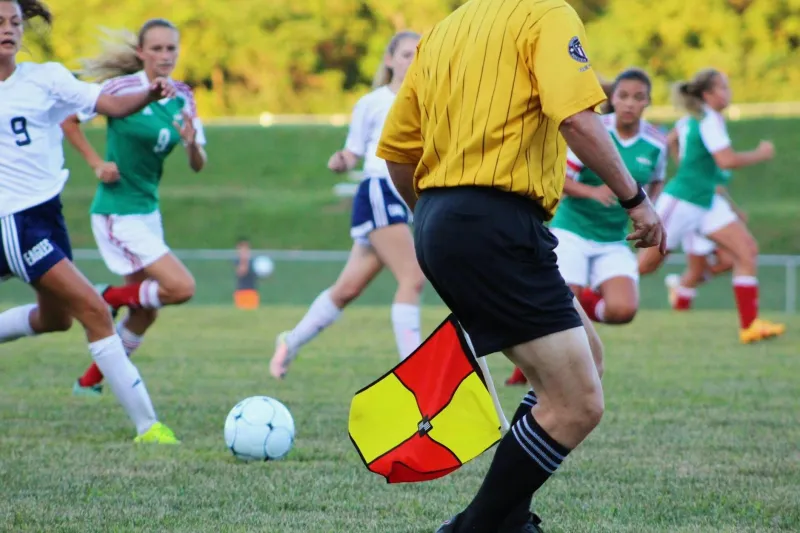
While male referees dominate the professional game, women are quietly revolutionising grassroots officiating across Britain. In some counties, over 40% of new referee registrations are women, and their impact extends far beyond just blowing the whistle.
"Women referees often bring different qualities to the game," explains Rebecca Welch, who became the first woman to referee in the EFL in 2021. "We tend to be better communicators, more focused on defusing situations rather than escalating them. But most importantly, we're showing young girls that every role in sport is available to them."
The statistics support this: matches officiated by women referees have significantly lower rates of serious disciplinary incidents, and post-match surveys consistently show higher satisfaction rates from players and spectators.
Yet women referees still face abuse that their male counterparts never experience. "I've been called things on a football pitch that I wouldn't repeat in polite company," admits Sarah Mitchell, who referees in the Northern Premier League. "But I keep going because I love the game, and because I want my daughter to see that women belong everywhere in sport."
The Analytics Revolution
Behind every modern sporting success story is a team of data analysts, and increasingly, those analysts are women. At Manchester City's training ground, the performance analysis department is run by Sarah Thompson, whose insights have been crucial to the club's recent success.
"Football is becoming more scientific, more data-driven, and women are naturally suited to that analytical approach," Sarah explains, surrounded by monitors showing heat maps and passing statistics. "We're detail-oriented, we're collaborative, and we're not afraid to challenge traditional thinking."
Sarah's team produces reports that influence everything from team selection to transfer strategy, yet her name has never appeared in a match programme or been mentioned by a television commentator.
"The players and coaches know how important our work is," she says. "But the public sees the goals and the celebrations. They don't see the hours of analysis that made those moments possible."
The Physio Who Never Sleeps
At the British Athletics training centre in Loughborough, head physiotherapist Dr. Lisa Chen works with some of the country's most promising athletes. Her days start at 6am with injury assessments and don't end until the last athlete has been treated, often well past 9pm.
"People think physiotherapy is just massage and stretching," Lisa laughs, demonstrating a complex movement pattern on one of her patients. "But we're part sports scientist, part psychologist, part detective. We're often the first to spot when an athlete is struggling mentally as well as physically."
Lisa's interventions have kept countless athletes competing at the highest level, preventing career-ending injuries and enabling breakthrough performances. Yet when those athletes succeed, the headlines focus on their coaches and training methods, rarely mentioning the medical professionals who kept them healthy.
"I don't need the credit," Lisa insists. "But I do think it's important for young women to see that there are incredible careers available in sport that don't involve being the person holding the trophy."
The Talent Scout With Golden Eyes
In a nondescript office in Birmingham, Julie Walker maintains a database of over 3,000 young footballers across the Midlands. As a talent scout for several professional clubs, she's responsible for identifying the next generation of stars, often spotting potential in players that others have overlooked.
"I've been doing this for fifteen years, and I've identified players who are now playing in the Premier League," Julie explains, pointing to photos on her office wall. "But most people don't even know talent scouts exist, let alone that many of us are women."
Julie's eye for talent is legendary within football circles. She was the first scout to recommend several players who went on to represent England, and her reports are sought after by clubs across the country. Yet her name appears nowhere in their success stories.
"It's not about recognition," Julie says. "It's about giving young players opportunities. But I do think it would help if people knew that women are involved at every level of football, not just in the women's game."
The Future Is Female (And It Always Was)
The truth about British sport is that it has always depended on women's expertise, dedication, and passion. What's changing is that we're finally starting to acknowledge it.
"The narrative is slowly shifting," believes Dr. Richardson. "Younger sports fans are more aware of the diverse range of people who contribute to sporting success. They're asking different questions and demanding more inclusive coverage."
This shift is crucial not just for recognition, but for inspiring the next generation. When young girls see women in every aspect of sport — not just as players, but as leaders, innovators, and decision-makers — they begin to see sport as a place where they truly belong.
Time to Change the Story
Margaret Henley is back at Oldham Athletic's training ground at 5am tomorrow morning, just as she has been for the past two decades. She'll check the pitch, adjust the sprinkler system, and prepare the surface for another day of training. The players will arrive, the coaches will set up their sessions, and the match will go ahead as planned.
And once again, Margaret's contribution will be invisible to everyone except those who know that great football starts with great grass.
It's time we started telling the whole story of British sport — including the brilliant women who've been writing it all along.