Britain's Invisible Champions: The Paralympic Heroes You've Never Heard Of
Training in the Shadows
At 5:30 AM on a Tuesday morning in Stockport, while most of Britain is still hitting the snooze button, Sophie Williams is already halfway through her swimming session. The 24-year-old, who was born without her left arm, has just posted a time that would have won Paralympic gold in Tokyo. The only witnesses are a sleepy lifeguard and the automatic timing system that most people ignore.
Sophie isn't unique in her obscurity. Across Britain, Paralympic and disability sport athletes are quietly rewriting record books, pushing human limits, and representing their country with distinction – all while training in near-complete anonymity.
The Funding Desert
The numbers tell a stark story. UK Sport's latest funding cycle allocated £352 million to Olympic sports and just £49 million to Paralympic programmes. That's a ratio that becomes even more pronounced when you drill down to individual athletes.
Take Marcus Chen, Britain's world number three in Paralympic powerlifting. His annual funding? Zero pounds. His day job as a warehouse operative in Slough pays for his coaching, travel to competitions, and the specialised equipment that allows him to lift weights that would challenge most able-bodied athletes.
"I work nights so I can train during the day," Marcus explains, his matter-of-fact tone belying the extraordinary sacrifice. "My mates think I'm mad, but when you're lifting for Britain, you find a way."
Meanwhile, Premier League footballers earn more in a week than most Paralympic athletes see in a lifetime of competition.
Hidden in Plain Sight
The invisibility of Paralympic sport in Britain isn't just about money – it's about attention. When Jonnie Peacock blazed to T44 100m glory in London 2012, the nation watched. But between Paralympic Games, these athletes might as well be training on Mars for all the coverage they receive.
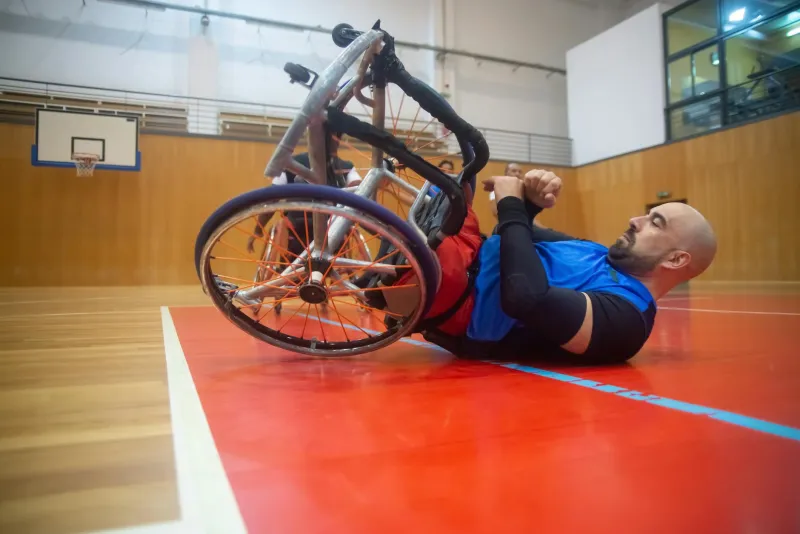
Consider Emma Rodriguez, Britain's leading wheelchair racer. She holds three European records and regularly beats times that would have won Paralympic medals just eight years ago. Her training ground? The car park behind a retail park in Coventry, where she weaves between lamp posts at dawn before most people have their morning coffee.
"I've had shoppers ask if I'm lost," Emma laughs. "They can't quite compute that someone might be training for international competition behind Currys PC World."
The Grassroots Heroes
What makes these athletes even more remarkable is the network of volunteers keeping their dreams alive. Meet Dave Thompson, a retired teacher from Hull who coaches five Paralympic hopefuls in his spare time – for free. His "facility" is a converted garage where he's created training programmes that rival anything produced by well-funded national centres.
Dave's athletes have won seven Paralympic medals between them, yet he's never been officially recognised by any governing body. "I don't do it for awards," he says, adjusting the homemade equipment that's produced world champions. "I do it because these kids deserve the same chances as anyone else."
The Media Blackout
The contrast with able-bodied sport is jarring. When Lewis Hamilton wins a Grand Prix, it's front-page news. When Kadeena Cox breaks a world record in Paralympic cycling, it barely registers a tweet from the official Paralympics account.
This media drought has real consequences. Sponsors follow eyeballs, and without coverage, Paralympic athletes struggle to attract the commercial backing that could transform their training conditions. It's a vicious cycle that keeps brilliant athletes in the shadows.
Sarah Jenkins, who holds two world records in Paralympic swimming, sums it up perfectly: "I could swim the Channel backwards while juggling, and it wouldn't get as much coverage as a Premier League player's new haircut."
The Four-Year Phenomenon
Every four years, Britain suddenly discovers Paralympic sport. The coverage during the Games is extensive, emotional, and inspiring. Viewing figures soar, social media explodes with support, and politicians queue up to praise our Paralympic heroes.
Then the closing ceremony ends, and it's back to training in empty leisure centres with broken lane ropes.
This boom-bust cycle is particularly cruel because it shows what's possible. During Paris 2024, Channel 4's coverage reached millions and proved there's genuine appetite for Paralympic sport. Yet within weeks, these same athletes were back to anonymity.
Breaking Barriers Beyond Sport
What makes Paralympic athletes' achievements even more significant is the barriers they overcome just to compete. Access issues, equipment costs, and societal attitudes create obstacles that able-bodied athletes never face.
Tom Bradley, a Paralympic archer from Wales, travels 200 miles to his nearest accessible training facility. His weekly routine involves more logistics than most people's annual holidays, yet he's currently ranked second in the world in his classification.
"People see the disability first and assume limitation," Tom explains. "They don't see the 40 hours a week of training, the technical precision, or the mental strength it takes to compete at this level."
The Untold Economic Impact
Beyond the human stories lies an uncomfortable economic truth. Paralympic sport generates significant returns on investment – but only when properly supported. Analysis of London 2012 showed that Paralympic events contributed over £154 million to the UK economy, yet ongoing investment remains a fraction of that windfall.
Countries like Australia and Germany have recognised this, creating year-round Paralympic programmes that develop talent systematically rather than hoping for lightning in a bottle every four years.
The Next Generation
Perhaps most concerning is the message this sends to young disabled people considering sport. When Paralympic champions are working night shifts to fund their training, what hope do grassroots participants have?
Yet still they come. School programmes across Britain are identifying talented young disabled athletes who dream of representing their country. They deserve better than borrowed equipment and 5 AM training sessions in empty pools.
A Call to Action
Britain's Paralympic athletes aren't asking for Premier League wages or Hollywood treatment. They're asking for the basic recognition that their achievements deserve. They're asking for training facilities that don't require military-level planning to access. They're asking for coverage that extends beyond the two weeks every four years when the world briefly pays attention.
Most importantly, they're asking for the chance to inspire the next generation of disabled people to see sport not as something that happens to other people, but as something they could excel at too.
The Champions Among Us
The next time you're in your local leisure centre at an ungodly hour, look around. That person in the pool might be swimming times that would have won Paralympic gold. The athlete in the corner of the gym might be lifting weights that defy belief. The wheelchair user practising their racing technique in the car park might be Britain's next Paralympic champion.
They're hiding in plain sight, these invisible champions. The question is: how long will we let them stay invisible?