From Heart Rate to Hat-Tricks: The Data Revolution That's Secretly Transforming British Sport
From Heart Rate to Hat-Tricks: The Data Revolution That's Secretly Transforming British Sport
At 6am on a Tuesday morning in Slough, Dave Matthews is strapping a GPS vest over his football shirt before training with his local semi-professional side. The device will track his every movement, measure his heart rate, and analyse his sprint patterns. By evening, he'll have more performance data than David Beckham had during his entire Manchester United career.
Welcome to the data revolution that's quietly transforming British sport from the Premier League all the way down to your local park.
The Trickle-Down Effect
What started as the exclusive domain of elite clubs with million-pound budgets has filtered down through British sport faster than anyone expected. Technology that once required dedicated analysts and custom software now fits in your pocket and costs less than a decent pair of boots.
"Five years ago, we were guessing," says Sarah Johnson, coach of a women's football team in the Northern Premier League. "Now I know exactly who's covered the most ground, who's hitting their top speeds, and who needs a rest day. It's transformed how we prepare."
Johnson's team uses consumer-grade GPS trackers that cost £200 each – a fraction of what professional clubs pay for similar data. The insights they provide, however, are remarkably similar.
The Sunday League Scientists
Perhaps nowhere is this revolution more surprising than in grassroots football. Sunday league teams across Britain are embracing everything from heart rate monitors to video analysis apps, turning weekend warriors into part-time sports scientists.
The Rovers FC in Manchester (not that one) recently invested in a basic video analysis system that costs less than their annual kit budget. Manager Tony Walsh uses it to break down opposition tactics and highlight individual player improvements.
"The lads thought I'd lost it at first," Walsh laughs. "Now they're asking for their personal highlight reels and wanting to know their passing accuracy. It's addictive."
Cricket's Quiet Revolution
Cricket, with its natural love of statistics, has embraced the data revolution perhaps more enthusiastically than any other sport. Local clubs are using ball-tracking apps to analyse bowling patterns and batting techniques that would have required expensive equipment just a decade ago.
At Hertford Cricket Club, captain James Morrison uses a tablet app to track every ball bowled during matches. The data helps him set fields, rotate bowlers, and identify opposition weaknesses – all for the cost of a monthly subscription.
"We beat our local rivals for the first time in five years last season," Morrison explains. "The data showed they struggled against spin bowling on a good length outside off-stump. We bowled to that plan and won by 30 runs."
The Wearable Warriors
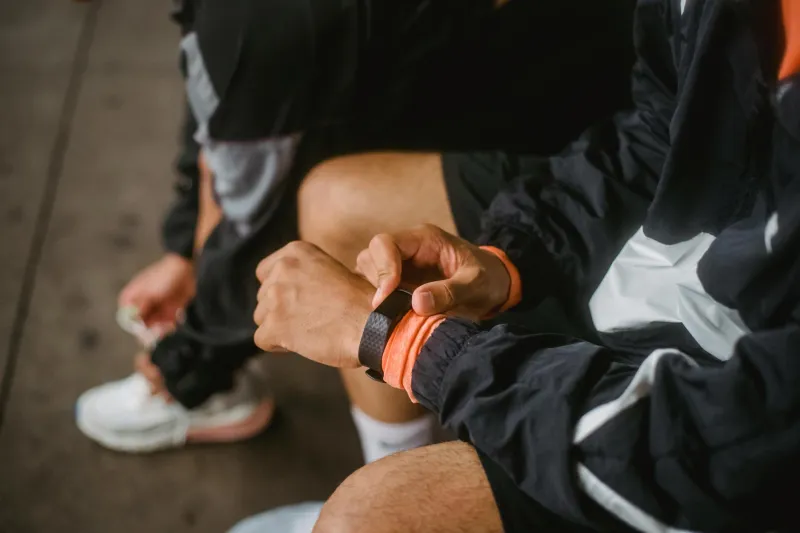
The explosion in consumer fitness technology has created an army of amateur athletes obsessed with optimisation. Runners track their cadence, swimmers monitor their stroke count, and cyclists analyse their power output with the dedication of Tour de France professionals.
Local athletics clubs report members arriving at training sessions with detailed printouts of their previous week's performance data. Coaches who once relied on stopwatches and intuition now find themselves managing athletes who know their lactate threshold and VO2 max.
"It's brilliant but slightly terrifying," admits Mike Thompson, coach at Reading Athletic Club. "I have 16-year-olds who understand sports science better than I did at 30. They're pushing me to learn and adapt constantly."
The AI Advantage
Artificial intelligence has made perhaps the biggest impact at the amateur level. Apps can now analyse tennis serves, golf swings, and football techniques using nothing more than a smartphone camera. The feedback is instant, detailed, and surprisingly accurate.
Local tennis clubs are using AI-powered apps to help members improve their technique between lessons. The technology can spot flaws in serving motion or footwork that might take human coaches hours to identify.
Rugby's Data Embrace
Rugby clubs across Britain are using GPS data to manage player workloads and reduce injuries. Even at amateur level, the physical demands of the sport make this information invaluable.
Old Deer Park RFC in London started using basic GPS trackers after a spate of injuries. The data revealed that certain players were consistently overexerting themselves, leading to fatigue-related problems.
"We thought fitness was just about running more," explains club captain Rob Stevens. "The data showed us that recovery and load management were just as important. Our injury rate dropped by 40% in one season."
The Sleep Revolution
Perhaps the most surprising development is the focus on recovery and sleep data. Athletes at all levels are using sleep tracking devices to optimise their rest and recovery – information that's proving just as valuable as training metrics.
Local cycling clubs report members comparing sleep scores as obsessively as they once compared ride times. The data is revealing patterns that help athletes understand when they're overtraining or when they're primed for peak performance.
The Human Touch
Despite the data explosion, successful coaches at all levels stress that technology enhances rather than replaces human intuition and experience.
"The numbers tell you what happened, but they don't tell you why," says Emma Richards, who coaches a successful youth athletics programme in Wales. "You still need to understand the individual, their motivation, their fears, and their goals. Data informs decisions, but it doesn't make them."
The Democratisation Effect
What's remarkable about this revolution is how it's levelling the playing field. Small clubs can now access insights that were once the exclusive preserve of professional teams. A village cricket club can analyse opposition batting patterns with the same sophistication as a county side.
This democratisation is creating unexpected success stories. Teams that embrace data intelligently are punching above their weight, while traditionalists who ignore it are being left behind.
The Dark Side of Data
Not everything about the data revolution is positive. Some athletes become obsessed with metrics at the expense of enjoyment. Others suffer from information overload, paralysed by too much data rather than empowered by it.
"I've seen players check their GPS data at half-time instead of listening to tactical instructions," warns one local football manager. "The tail can start wagging the dog if you're not careful."
The Future is Now
As technology becomes cheaper and more accessible, expect the data revolution to accelerate. Virtual reality training is already appearing at amateur level, while AI coaching assistants are becoming sophisticated enough to provide personalised training programmes.
The question isn't whether data will continue to transform British sport – it's how quickly athletes and coaches at all levels will adapt to this new reality.
Keeping It Real
Perhaps the most important lesson from this revolution is that data works best when it serves the sport, not the other way around. The most successful teams and athletes use technology to enhance their natural abilities and understanding, not replace them.
As Dave Matthews discovered during his Tuesday morning training session, the GPS vest told him he'd covered more ground than usual but was working at a lower intensity. The data helped him understand that his fitness was improving, but it was his coach's encouragement and his teammates' support that motivated him to push harder in the final sprint.
That's the real power of the data revolution – it's making sport more scientific without making it less human. And across Britain, from Premier League academies to Sunday league pitches, athletes are discovering that the best performance comes from combining the precision of technology with the passion that makes sport special in the first place.