Glass Boxes and Empty Hearts: The Sterile Stadium Revolution Killing British Football's Soul
Glass Boxes and Empty Hearts: The Sterile Stadium Revolution Killing British Football's Soul
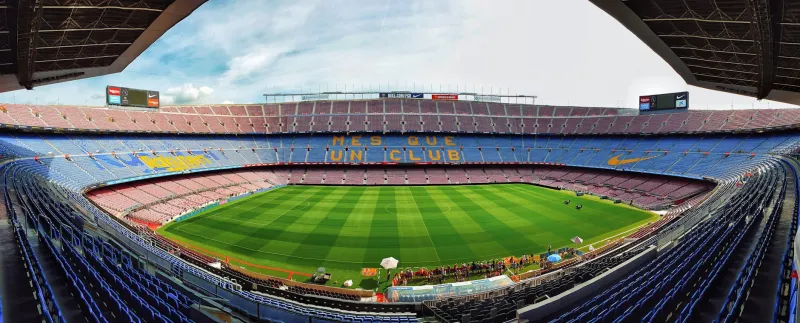
Walk into the Emirates Stadium on a matchday and you'll be struck by two things immediately: the breathtaking scale of the place, and the eerie quiet that hangs over 60,000 seats like morning fog. Arsenal's home since 2006 is a masterpiece of modern engineering – clean lines, perfect sightlines, and enough corporate hospitality suites to house a small village. It's also about as atmospheric as a library during exams.
The Shiny New Problem
Across Britain, football clubs are abandoning their cramped, creaky old grounds for gleaming new arenas that promise everything: better facilities, increased capacity, and most importantly, vastly improved revenue streams. Tottenham's £1.2 billion palace in North London can transform from football pitch to NFL field faster than you can say "franchise". Brighton's Amex Stadium rises from the South Downs like something from a sci-fi film. Leicester's King Power Stadium replaced the intimate Filbert Street with corporate efficiency.
These venues are undoubtedly impressive. They're also utterly soulless.
"It's like watching football in a shopping centre," says Marcus Thompson, a Spurs season ticket holder who made the move from White Hart Lane to the new stadium. "Everything's too clean, too organised. You can't even hear yourself think, let alone create proper noise."
What We've Lost in Translation
The old grounds weren't just buildings – they were living, breathing extensions of their communities. Highbury's marble halls and Art Deco façade spoke to Arsenal's heritage. The cramped terraces at the original White Hart Lane meant 36,000 fans could generate more noise than 62,000 in the new version. These weren't accidents of design; they were features.
Modern stadium architects, often working with international firms who've never experienced a proper British football atmosphere, prioritise sight lines over sound lines, comfort over chaos, and revenue generation over raw emotion. The result? Venues that photograph beautifully but feel emotionally hollow.
"We've optimised the fan experience right out of existence," argues Dr. Sarah Mitchell, who studies sports architecture at Liverpool University. "When you design a stadium primarily as a revenue vehicle rather than a community space, you lose the very thing that makes football special – the connection between supporters and their club."
The Corporate Takeover
Walk around any new British stadium and you'll notice something telling: the best seats aren't filled with the most passionate fans, they're occupied by corporate guests checking their phones between courses of their three-course meal. These premium areas – essential for the financial viability of modern venues – create dead zones where atmosphere goes to die.
The Emirates' infamous "prawn sandwich brigade" has become a lazy stereotype, but it points to a real problem. When you price out working-class supporters and replace them with hospitality customers who view football as networking, you fundamentally change the energy of the venue.
Brighton fans call their stadium "Falmer" rather than the sponsor-mandated "Amex" – a small act of rebellion against the corporatisation of their matchday experience. But even at the Amex, widely considered one of the better new grounds, supporters struggle to recreate the intimacy they had at the old Goldstone Ground.
The Atmosphere Architects
Some clubs are learning. Crystal Palace's recent redevelopment of Selhurst Park focused on maintaining the ground's notorious atmosphere while improving facilities. Rather than starting from scratch, they've enhanced what already worked – keeping the Holmesdale End's steep gradient and proximity to the pitch that makes it one of the Premier League's most intimidating venues.
Similarly, Celtic Park's expansion in the 1990s managed to increase capacity while preserving the cauldron-like atmosphere that makes it special. The key? Understanding that atmosphere isn't an accident – it's engineered through careful consideration of acoustics, supporter positioning, and the relationship between stands and pitch.
The German Example
German clubs offer a masterclass in balancing modernity with atmosphere. Borussia Dortmund's Westfalenstadion (or Signal Iduna Park, if you must) holds over 80,000 but maintains an intimacy that puts most Premier League grounds to shame. The secret? The famous "Yellow Wall" – a single-tier stand holding 25,000 supporters that creates a wall of noise and colour.
British architects and planners could learn from this approach, but it requires clubs to prioritise atmosphere over pure revenue – a tough sell in today's financial climate.
The Fan Rebellion
Not everyone's accepting this sanitisation quietly. FC United of Manchester, formed by supporters disgusted with Old Trafford's transformation into a tourist destination, built their own ground in Moston that deliberately echoes football's roots – terracing, affordable tickets, and community ownership.
Their 4,000-capacity Broadhurst Park proves you don't need corporate boxes and NFL compatibility to create something special. Sometimes, smaller is better.
Building for the Future
The challenge for British football is finding a way forward that doesn't sacrifice soul for sustainability. New stadiums will continue to be built – clubs need the revenue they generate to compete. But there's no reason they have to be sterile corporate monuments.
The best new venues understand that atmosphere is a feature, not a bug. They design with acoustics in mind, create spaces for different types of supporters, and remember that football stadiums aren't just buildings – they're homes.
As more clubs consider relocating or rebuilding, they have a choice: follow the Emirates model of corporate efficiency, or find a way to bottle the magic that made their old grounds special and pour it into something new.
Because at the end of the day, you can't Instagram your way to atmosphere. That requires something far more elusive – the beating heart of a community that refuses to be sanitised.