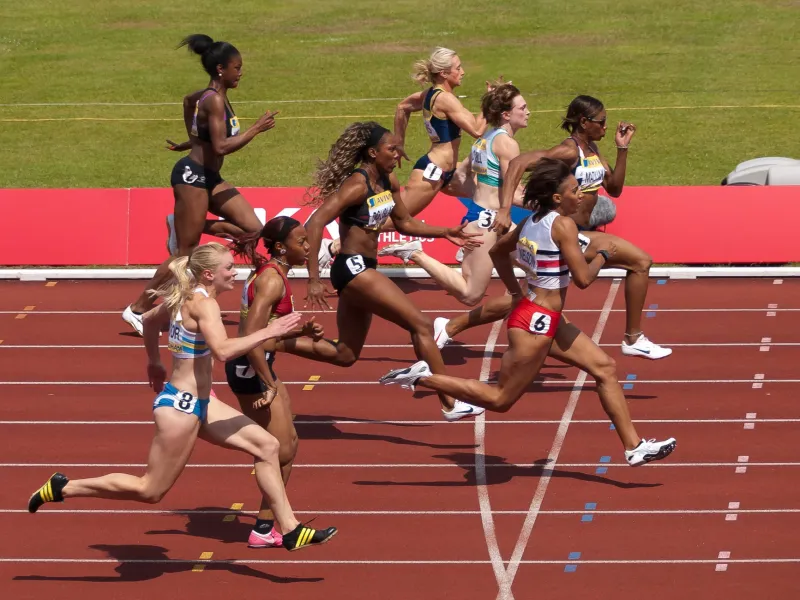
Double Trouble: The British Athletes Mastering Two Sports While Coaches Lose Their Minds
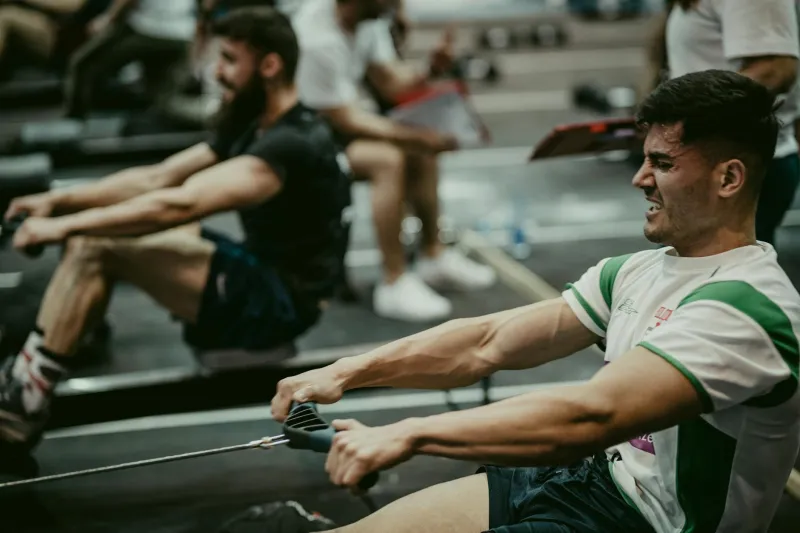
The Heretics of High Performance
At 6 AM on a Tuesday morning, while most teenagers are negotiating five more minutes under the duvet, 17-year-old Emma Richardson is already two hours into her day. She's completed a rowing session on the Thames, grabbed a protein shake, and is now lacing up her spikes for sprint training. By evening, she'll be back in the boat. Tomorrow, she'll reverse the order.
Her rowing coach thinks she's mad. Her athletics coach thinks she's sabotaging her potential. Emma thinks they're both missing the point entirely.
"They keep telling me I need to choose," she laughs, towelling off after a particularly brutal 500-metre session. "But why should I? I'm faster on the track because rowing built my power. I'm stronger in the boat because sprinting taught me explosive starts. They see conflict where I see synergy."
Emma isn't alone in her sporting polygamy. Across Britain, a quiet revolution is brewing as young athletes reject the conventional wisdom of single-sport specialisation, creating their own hybrid training programmes that would give traditionalists nightmares.
The Specialisation Obsession
British sport has spent the last two decades preaching the gospel of early specialisation. Pick your sport, pick it young, and dedicate every waking moment to perfecting it. The logic seemed sound: look at tennis academies churning out prodigies, swimming programmes producing Olympic medallists, and football academies creating millionaires before they can legally buy a pint.
But somewhere between the theory and the practice, cracks began to appear. Burnout rates soared, injury lists lengthened, and coaches started noticing something odd: their most naturally gifted athletes often came from multi-sport backgrounds.
"We've created this myth that specialisation equals excellence," argues Dr. Mike Stevens, a sports scientist at Birmingham University who's been tracking multi-sport athletes for five years. "But the evidence suggests the opposite. The most successful athletes often have the broadest athletic foundation."
 Photo: Birmingham University, via lup.openingthefuture.net
The Crossover Champions
Take Jack Morrison, 19, from Glasgow. Officially, he's a promising middle-distance runner with times that have caught the attention of British Athletics. Unofficially, he spends his winters on the rugby pitch, terrorising opponents with the kind of acceleration that 800-metre training provides.
"My running coach nearly had a heart attack when he found out," Jack grins, showing off a collection of scars that tell stories of rucks and mauls. "He kept going on about injury risk and conflicting training adaptations. But my best 800m time came two weeks after our cup final. The power and contact confidence from rugby makes me fearless in a tight finish."
The science backs up Jack's instincts. Research from Australian Institute of Sport shows that athletes who participate in multiple sports during their developmental years demonstrate superior movement patterns, reduced injury rates, and greater longevity in their primary discipline.
The Coaches' Dilemma
Not everyone's convinced. Traditional coaching structures are built around the assumption of total commitment, and multi-sport athletes represent a philosophical challenge that many find deeply uncomfortable.
"I understand the appeal," sighs Helen Davies, a swimming coach who's watched several promising talents drift toward other pools. "But at elite level, the margins are so small that any distraction can be the difference between making a team and watching from home. When your athlete's doing water polo twice a week, that's two sessions they're not perfecting their stroke technique."
The tension creates impossible choices for young athletes caught between their instincts and their coaches' expectations. Many resort to secrecy, training in their secondary sport during supposed rest periods or claiming injury to attend competitions in other disciplines.
The Underground Network
This sporting speakeasy has created an underground network of athletes, coaches, and facilities willing to support multi-sport development. Private gyms offer "cross-training" sessions that are really disguised rugby fitness. Swimming pools rent lanes to "general fitness" groups that happen to include promising rowers. Athletics tracks welcome "recreational joggers" who can mysteriously run sub-50-second 400 metres.
"It shouldn't have to be this way," argues Tom Fletcher, a strength and conditioning coach who works with athletes from six different sports. "In other countries, multi-sport development is encouraged. Here, we've created a system where natural athletes have to choose between following their passion and maximising their potential."
Success Stories
The rebels are starting to prove their point. Rebecca Thompson parlayed her hockey acceleration into a place on the British bobsled team. David Chen's cricket batting technique revolutionised his table tennis backhand, earning him a place on the national junior squad. Sarah Williams credits her gymnastics background for the core strength that made her a world-class pole vaulter.
"The best athletes I work with aren't the ones who've done one sport since they were seven," observes performance analyst Dr. James Wright. "They're the ones who've learned to move in multiple ways, solve different physical problems, and adapt to varying competitive pressures. Specialisation might create efficient athletes, but diversification creates intelligent ones."
The Future of Multi-Sport Britain
Signs suggest the tide might be turning. Sport England's latest strategy document mentions "multi-sport pathways," and several governing bodies are quietly piloting programmes that allow athletes to maintain involvement in secondary disciplines.
The breakthrough might come from an unexpected source: professional sport's growing interest in athletic intelligence over pure physical gifts. Teams are increasingly valuing players who can think tactically across multiple scenarios – exactly the kind of cognitive flexibility that multi-sport participation develops.
"We're starting to realise that asking a 14-year-old to choose their sporting destiny forever might not be the wisest approach," admits one national governing body official, speaking anonymously. "Maybe the kids who refuse to specialise aren't being difficult. Maybe they're being smart."
The New Athletic Renaissance
Back at the Thames, Emma Richardson is preparing for her evening rowing session after a morning that included sprint training and a lunchtime football kickabout with friends. Her times in both sports continue to improve, defying the predictions of coaches who warned about conflicting adaptations and divided focus.
"I love that moment when something clicks between sports," she reflects, adjusting her oars. "Like when a perfect catch in rowing teaches you about body position for sprint starts, or when the rhythm of running helps you find flow in the boat. You can't plan these connections – they just happen when you're brave enough to try."
As British sport grapples with its identity in an increasingly competitive global landscape, perhaps the answer lies not in doing one thing perfectly, but in doing many things brilliantly. The multi-sport mavericks might just be showing us the future – if we're brave enough to follow.