The Three-Dart Finish That Started a War
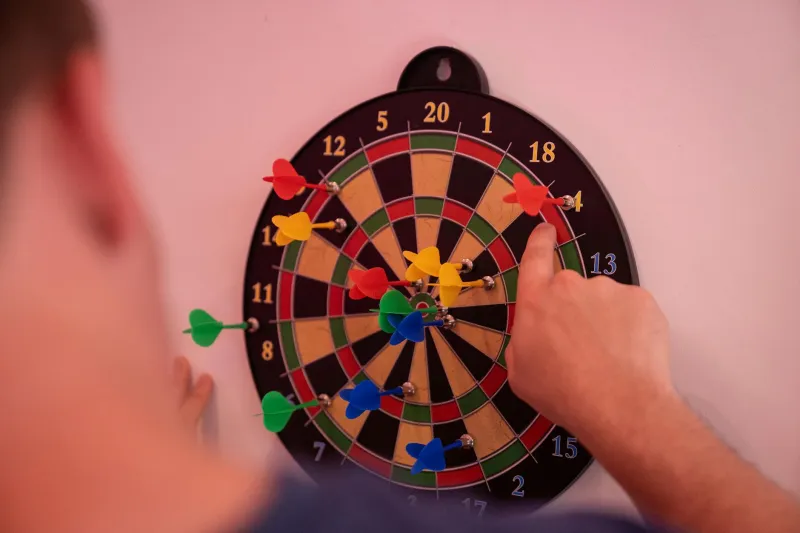
It's 9:47pm on a Tuesday night at The Red Lion in Stockport, and Dave 'The Destroyer' Thompson has just thrown what might be the most important 180 of his life. The pub has gone silent except for the hum of the fruit machine and someone's nervous cough. This isn't just any match — it's the semi-final of the Greater Manchester Pub Darts Championship, and Dave's opponent, Big Tony from The Crown & Anchor, is sweating through his lucky polo shirt.
 Photo: The Red Lion, via companieslogo.com
Welcome to the hidden world of British pub sport, where the stakes are higher than most people realise and the competition fiercer than anything you'll see on Sky Sports.
More Than Just a Game
Whilst the rest of the country obsesses over Premier League transfer rumours, millions of Brits are locked in their own sporting battles every week. The numbers are staggering: over 600,000 people regularly compete in organised pub leagues across England alone, with darts leading the charge but pool, skittles, cribbage, and even dominoes drawing serious crowds.
"People think we're just having a laugh, but this is proper sport," says Sarah Mitchell, captain of the Lamb & Flag ladies' darts team in Bristol. "We train twice a week, we've got sponsors, and our league table gets more scrutiny than most football divisions."
Sarah isn't exaggerating. The West Country Ladies Darts Federation maintains detailed statistics, drug testing protocols, and prize money that can reach into the thousands. Players travel hundreds of miles for matches, invest in custom tungsten arrows, and employ coaches who charge £50 an hour.
The Geography of Glory
Certain regions have developed reputations as breeding grounds for pub sport excellence. Yorkshire dominates dominoes with an intensity that borders on religious. Somerset owns skittles so completely that the rest of England has basically given up trying. The Black Country produces pool players with machine-like precision, whilst Scotland's pub quiz circuits are so competitive they make University Challenge look like a gentle warm-up.
"It's cultural," explains Dr. James Whitfield, a sports sociologist at Sheffield Hallam University who's spent years studying pub leagues. "These communities developed around specific industries — mining, steel, textiles — and when those jobs disappeared, the social structures remained. The pub became the community centre, and competition became a way to maintain identity."
 Photo: Sheffield Hallam University, via c8.alamy.com
In Wigan, the local skittles league has been running continuously since 1923, surviving two world wars, multiple recessions, and the closure of every coal mine in the area. Teams still bear the names of long-demolished pits, and matches are treated with the reverence usually reserved for cup finals.
The Money Behind the Madness
Don't be fooled by the sticky carpets and questionable hygiene standards — there's serious money flowing through Britain's pub sport ecosystem. The British Darts Organisation estimates the amateur scene generates over £200 million annually through entry fees, equipment sales, travel, and the obvious beverage consumption.
Top players can earn decent livings without ever appearing on television. Jimmy 'The Surgeon' Walsh from Liverpool has made over £30,000 this year from local tournaments alone, whilst maintaining his day job as an actual surgeon. "The prize money's not bad, but it's the side bets where you can really clean up," he grins, before quickly adding that all gambling is done responsibly and within legal limits.
Heroes You've Never Heard Of
Every region has its legends — players whose exploits are retold in hushed tones across smoky taprooms. There's 'Bulletproof' Barry from Wolverhampton, who once played 47 consecutive pool matches without losing. Margaret 'The Missile' from Dundee, whose darts accuracy is so renowned that aerospace engineers have studied her throwing technique. And who could forget the great skittles scandal of 2019, when allegations of weighted balls nearly tore the Somerset league apart?
These aren't household names, but within their communities, they're treated like sporting royalty. Their matches draw crowds that would embarrass many professional sporting events, and their techniques are analysed with the intensity usually reserved for Test cricket.
The Future of the Boozer Battlegrounds
The pandemic nearly killed pub sport, with leagues suspended for months and many venues closing permanently. But the comeback has been remarkable. Younger players are joining in numbers not seen for decades, drawn by the combination of genuine competition and authentic community spirit that's increasingly rare in modern Britain.
"My son started playing darts during lockdown on one of those electronic boards," says Paul Henderson from Cardiff. "Now he's obsessed, and he's brought half his university mates down to the league. They love that it's real, that there's no Instagram influencers or corporate sponsors — just skill, nerve, and a pint afterwards."
New technology is creeping in — electronic scoreboards, live streaming of major matches, even smartphone apps for league management — but the fundamentals remain unchanged. It's still about turning up every week, representing your local, and proving that in Britain, the most serious sporting battles often happen in the most unlikely venues.
So next time you're dismissing pub sports as mere bar room entertainment, remember Dave 'The Destroyer' and his crucial 180. In communities across Britain, these aren't just games — they're a way of life, and the competition is absolutely deadly serious.